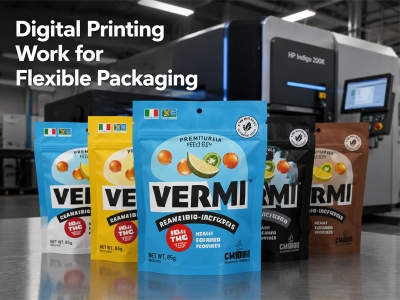
With continuous advancements in printing technology, digital printing has been increasingly applied to flexible packaging.
Numerous brands and packaging buyers face a tough decision when choosing between digital printing and traditional rotogravure printing. Most want to learn how digital printing functions and identify its unique merits before placing packaging orders.
This article explains the working principle, key process steps, main advantages and suitable applications of digital printing, which enables packaging manufacturers to print directly from digital artwork files.
What Makes Digital Printing Different for Flexible Packaging?
Digital printing holds a prominent position in flexible packaging due to its unique advantages, which are as follows:
Direct Printing from Digital Artwork
Digital printing can output directly from digital art files without creating physical printing plates or engraved cylinders before production. Therefore, brands can submit finished design files and quickly initiate production , eliminating time-consuming plate-making and cylinder setup processes. Minor graphic adjustments can also be implemented directly on digital files without extra manufacturing procedures.
No Printing Plate or Cylinder Setup
The greatest cost advantage of digital printing — requiring no installation of printing plates or engraved cylinders — significantly reducing plate-making expenses.
If you're seeking a more cost-effective solution and produce flexible packaging products in small batches, digital printing is an excellent choice.
Designed for Customized and Short-Run Packaging
For a series of flavors or multiple variants of the same product, customized flexible packaging must be developed separately. Digital printing meets these requirements and offers significant convenience in meeting these short-run production requirements for rapid product updates and new trial launches.
How Does Digital Printing Work Step by Step?
Digital printing involves a series of interconnected steps, each crucial to the final quality of flexible packaging. The details are as follows:
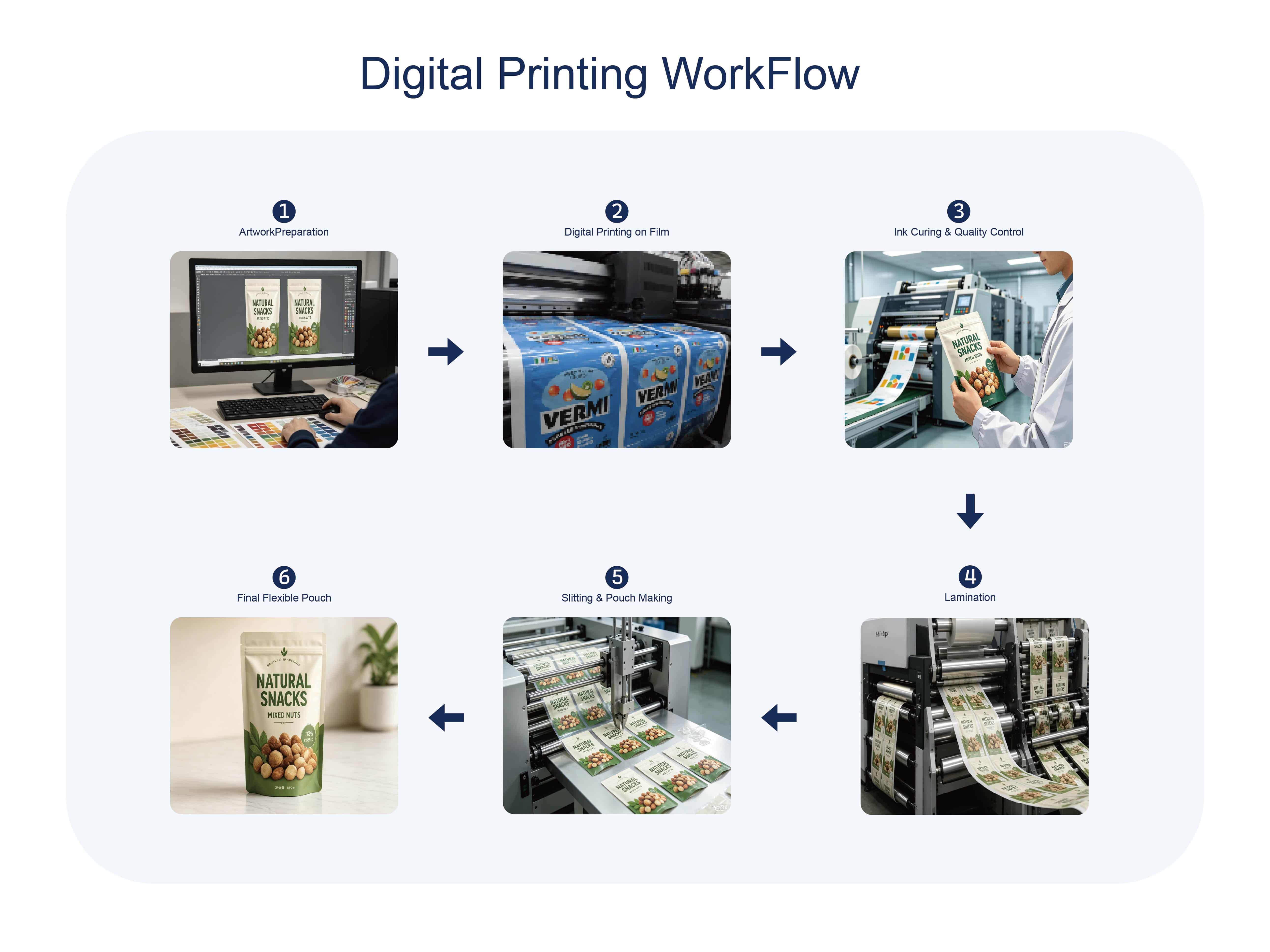
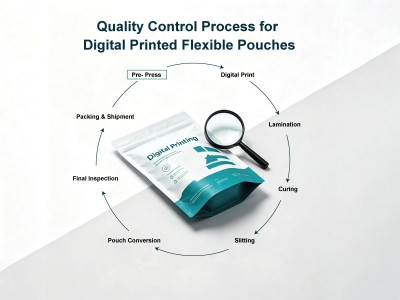
Step 1: Artwork Preparation and File Checking
The process starts with preparing artwork in high-resolution digital formats.
The client submits packaging design drafts. Our designers standardize file parameters including color mode, finished dimensions and special process markings. Verify all production requirements, check for poor image resolution, color deviations and text errors, and finalize pre-production artwork approval to avoid manufacturing defects.
Step 2: Digital Printing on Flexible Film
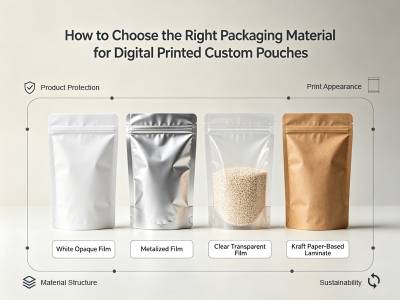
Based on the product's preservation requirements, select soft packaging substrates such as PET, kraft paper composite films, or single recyclable PE films; digital printing equipment directly reads the files to print graphics and text using ink onto the film surface—eliminating the need for plate-making—and supports personalized patterns and variable QR code printing.
Step 3: Ink Curing and Quality Control
After printing, the ink is dried or cured according to the specific digital printing technology, preventing the pattern from being scratched during the soft film winding process. Meanwhile, The first printed sample is inspected and approved before mass production.
Step 4: Lamination for Packaging Performance
To meet product freshness requirements, the printing film is compounded with a functional substrate layer to enhance the packaging's oxygen barrier, moisture resistance, light protection, and aroma preservation properties, enabling long-term food storage.
Step 5: Slitting and Pouch Making
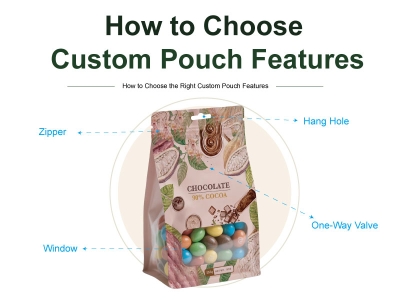
The wide-format composite film is cut to the specified dimensions, followed by thermal sealing processing to form target packaging shapes such as stand up pouches. If required, additional accessories such as zippers or one-way vent valves may be installed as needed.
Step 6: Final Inspection and Packaging Delivery
Once the packaging pouches are finished, we inspect finished pouches for sealing integrity, dimensions and printing appearance. Pouches with damage, color shifts or defective seals are rejected. The pouches shall be packed and shipped after passing all inspections.
Digital Printing Process vs Traditional Printing Process
While both technologies share the same post-print lamination and pouch converting steps, their front-end printing workflows differ significantly. Digital printing eliminates the cylinder fabrication and setup phases that dominate traditional rotogravure timelines.
|
Process Stage |
Rotogravure Printing |
Digital Printing |
|
Pre-print Preparation |
Plate-making required Artwork revisions require new cylinders |
No cylinder or plate required Artwork adjustable anytime |
|
Image Transfer Principle |
Ink transfer through engraved cylinders Fixed graphics for the whole batch |
Digital files directly control ink application without physical cylinders Dynamically adjustable content during printing |
|
Ink Drying Method |
Hot air drying with long heating tunnels |
Ink curing or drying based on digital printing technology |
|
Production Run Adaptability |
Works best for long continuous film rolls High material waste for short runs |
Flexible for both long and short rolls Less waste on small batches |
|
Post-print Winding |
Uniform fixed graphics on finished rolls |
Content can be paused or modified mid-run |
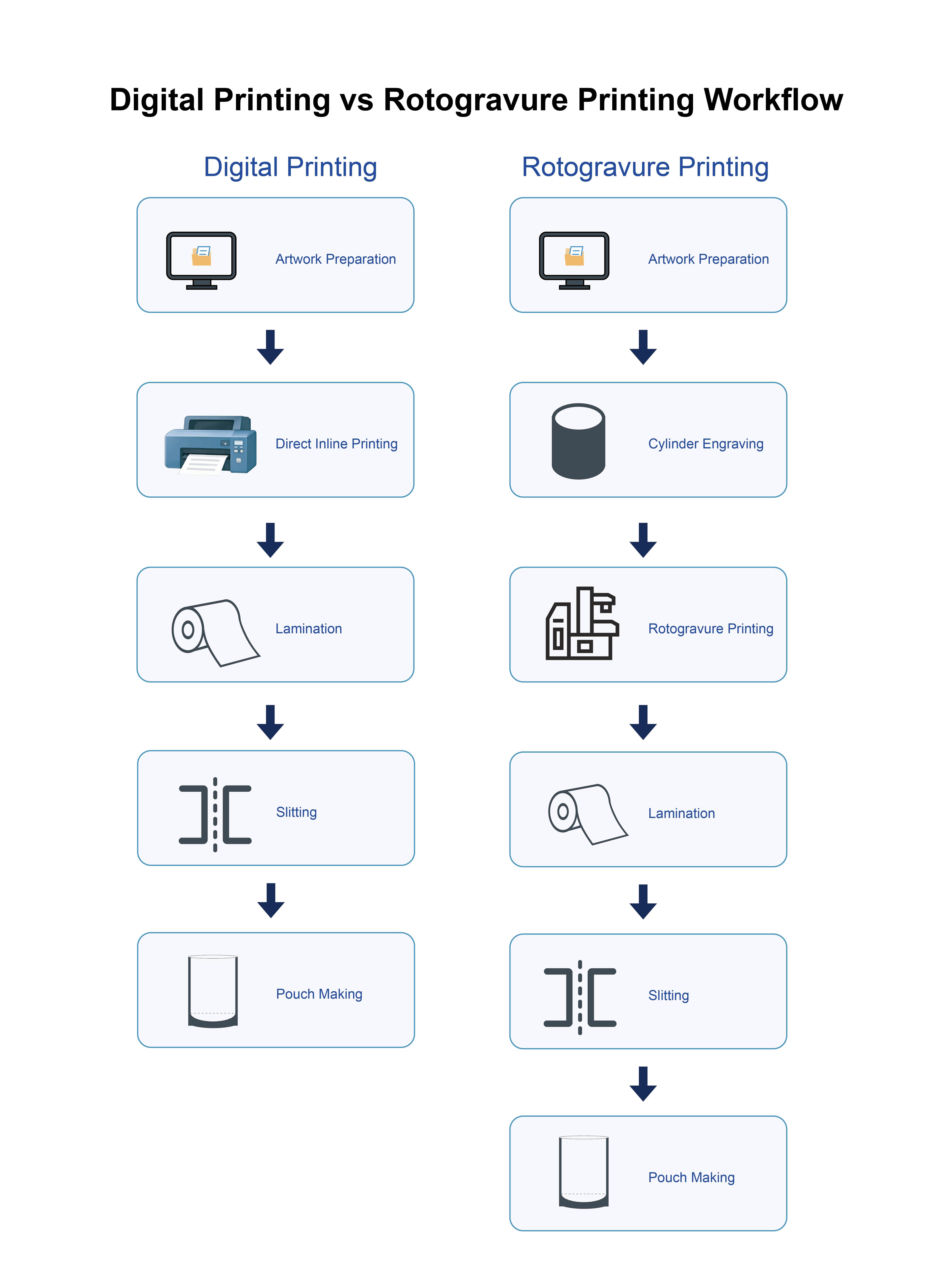
For flexible packaging, laminating, slitting and pouch making are shared processes for both rotogravure and digital printing. The major process differences occur before and during printing. Rotogravure requires engraved cylinder fabrication prior to production. Changing artwork needs new cylinders and long changeover time. Digital printing eliminates cylinder making and sends files directly to the printer,which supports dynamic variable data during printing and fast job switching without hardware replacement.
Why Are More Brands Choosing Digital Printing for Flexible Packaging?
Why are more and more brands opting for digital printing for custom flexible packaging?
Demand for personalized packaging and rapid product iteration keeps rising. Digital printing overcomes the limits of traditional rotogravure such as complex cylinder fabrication, long lead times and high MOQs, delivering three key benefits to brands:
- Faster product development and shorter packaging launch timeline
- Better design flexibility for artwork updates, limited runs and multi-SKU orders
- Lower packaging risks for small-batch trials and less inventory waste
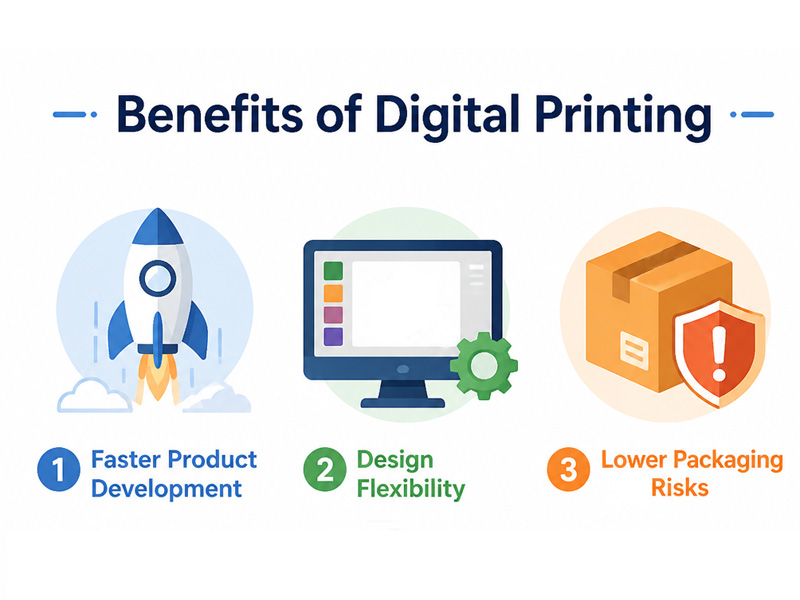
With these outstanding advantages, digital printing suits startups, seasonal goods and limited-edition lines, emerging as a preferred solution for brands of custom flexible pouches.
FAQs About Digital Printing for Flexible Packaging
1. Does digital printing require printing plates or cylinders?
No. Digital printing needs no physical plates or engraved cylinders. Designs are sent directly to the digital press via artwork files.
2. What types of flexible packaging can be produced with digital printing?
Digital printing works for most common flexible packaging styles, such as stand up pouches, flat pouches, coffee packaging, snack packaging and pet food packaging.
3. Is digital printing suitable for small packaging orders?
Absolutely. Thanks to the removal of plate costs, digital printing fits small-batch and personalised packaging perfectly. Brands can trial new items, roll out limited seasonal packaging and maintain several SKUs.
Conclusion
Digital printing is a powerful option for flexible packaging. It removes plate-making expenses and supports easy design changes, providing a quicker, more flexible and low-risk custom packaging solution.
The full workflow — artwork setup, direct film printing, lamination and pouch conversion — is tailored for flexible packaging manufacturing. It works perfectly for new product launches, seasonal limited editions and custom packaging projects, catering to short-run orders, multi-SKU management and fast product development.
Brands looking to balance packaging quality, design flexibility and production speed can rely on digital printing to adapt to changing market requirements.