When brands customize flexible pouches for their products, cost is often one of the primary considerations.
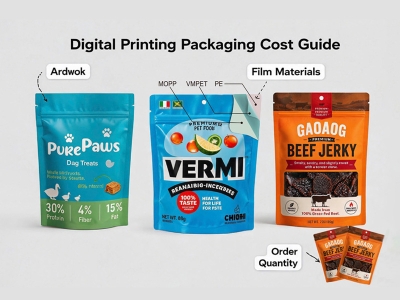
The cost of digital printed pouches varies depending on multiple factors.. Material, pouch size, order quantity, printing requirements, and additional features all influence the final cost. Understanding these factors helps prepare a realistic packaging budget and choose the right solution.
What Determines Digital Printing Packaging Cost?
Many brands struggle to predict packaging budgets, as quotations for digitally printed flexible pouches rely on multiple interrelated variables. Every decision around materials, sizes, custom elements and compliance will shift the final price. Below we break down the six key factors affecting packaging costs in detail.

1. Pouch Material and Structure
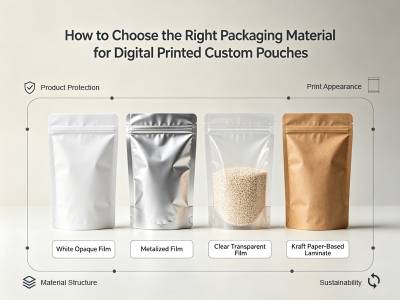
Material structure is one of the most significant factors affecting flexible pouch costs. Material costs vary by application, with rates listed for reference only.
|
Structure |
Application |
Cost Impact |
|
PET/PE |
Standard packaging |
Medium |
|
PET/AL/PE |
High barrier products |
Higher |
|
Kraft laminated |
Premium appearance |
Higher |
|
Mono PE |
Recyclable packaging |
Depends on specification |
Key points: Packaging costs are not determined solely by the material name, but by the overall structure, thickness, barrier performance, and application requirements.
For example, even two pouches using the same basic structure can differ greatly in price. If you upgrade barrier thickness or add light-blocking layers to extend shelf life, material expenses will rise accordingly.
2. Pouch Size and Dimensions
The dimensions of flexible pouches affect pricing. Larger pouch sizes generally increase costs due to higher material consumption, lower film utilization efficiency, and increased shipping volume. When confirming pouch sizes, brands should consider product net weight, target filling capacity and retail shelf display requirements.
3. Order Quantity and MOQ
The order quantity directly changes the unit price of flexible pouches, presenting two distinct cost scenarios. Small-batch orders come with a higher unit cost yet require less upfront capital. Large orders deliver better cost efficiency and a cheaper price per pouch.
It is worth mentioning that digital printing provides significant advantages for brands with small-batch demands, thanks to three core strengths:
- No plate cost
- Lower setup costs
- Flexible production volume
4. Printing Design and Artwork Requirements
The number of designs and SKUs directly affects total packaging costs, as brands frequently need multiple unique artworks for various scenarios, such as multi-flavor product lines, different product versions and limited seasonal packaging — an area where digital printing delivers clear advantages: it allows effortless artwork modifications, avoids additional cylinder-making costs for each artwork change, and facilitates fast design adjustments to align with market needs.
5. Pouch Features and Custom Options
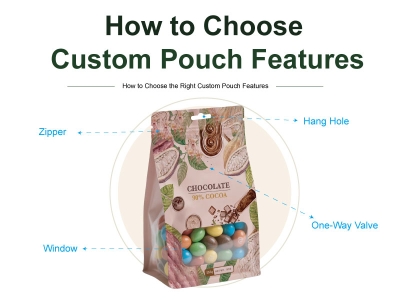
Every functional accessory and surface finish generates extra production costs. Popular functional upgrades include zipper closure, spout, window, tear notch and valve. Visual customization includes matte finishes, glossy finishes, and other premium effects, and all these custom selections increase the final price of flexible pouches.
We offer all the above custom features for flexible packaging. You can refer to the following picture showcasing our optional pouch accessories and surface treatments to select suitable upgrades matching your brand positioning and product demands.

6. Packaging Requirements and Compliance
Compliance requirements can directly affect packaging costs, mainly through three areas: material selection, safety testing, and product-specific requirements. Different products require different packaging structures and protection levels, leading to variations in pricing.
Examples include:
- Coffee Packaging
Coffee beans release carbon dioxide after roasting, requiring high-barrier materials such as aluminum composite films and one-way degassing valves. These specialized materials and components increase packaging costs. - Pet Food Packaging
Pet food packaging requires strong moisture resistance, oil resistance, odor protection and food-grade safety compliance. Large-capacity pouches often use thicker multi-layer barrier structures, resulting in higher packaging costs.
The cost of digital printed flexible pouches is influenced by multiple factors rather than a single element. Material structure, pouch size, order quantity, design requirements, custom features, and compliance standards all play important roles in determining the final price.
Digital Printing Packaging Cost Breakdown
Estimating the flexible packaging costs and the final quotation involve numerous influencing factors, making this process a complex task for many food and consumer goods brand owners. To help you clearly understand how packaging costs are determined, we have compiled a list of core cost factors in the table below.
|
Cost Factor |
Impact on Pricing |
|
Material structure |
Determines the base packaging cost based on film layers and barrier performance. |
|
Pouch size |
Affects raw material consumption and overall shipping expenses. |
|
Quantity |
Directly influences unit cost; larger volumes deliver lower pricing. |
|
Printing design |
Diverse SKUs and detailed artwork boost manufacturing costs. |
|
Features |
Adds functional and decorative value with extra processing costs. |
|
Compliance requirements |
Adds necessary material and safety testing costs for industry standards. |
How to Reduce Digital Printed Pouch Costs?
Knowing what affects the cost of digital printing packaging, it is entirely natural for manufacturers and brand owners to be concerned about how to reduce costs. Here are some suggestions for your reference.
Choose the Right Material Structure
Materials are one of the most significant factors for flexible pouches, brands can cut expenses by picking well-matched films. For instance, opt for PET/AL/PE high-barrier laminates only for coffee and pet food that need extended shelf life. Additionally, skip extra composite layers like extra aluminum foil or kraft paper to avoid unnecessary material costs.
Optimize Pouch Size and Features
Pouch dimensions and add-ons influence material and processing costs, so pouches should be sized precisely according to filling weight to avoid material waste. Furthermore, nonessential features including valves, clear windows and special coatings can be removed to avoid extra processing charges.
Plan Production Quantity
Order volume directly affects per-unit pricing, and smart quantity scheduling helps brands strike a cost balance. Brands can adopt a two-tier ordering strategy to control costs smartly. Choose small-batch digital printing for new launches or seasonal goods with unpredictable sales, while increasing order quantities for consistent bestsellers for consistent bestsellers helps secure cheaper unit rates without overstock risks.
Simplify Artwork Management
Artwork complexity creates hidden production surcharges. Brands can leverage the unique advantages of digital printing and simplify complex printing patterns—to reduce design-related costs; for example, take advantage of digital printing's lower setup requirements to fine-tune patterns or launch limited-edition SKU variants without incurring additional setup costs.
There are numerous factors that influence the cost of digital printing for flexible packaging pouches.For brands, the best packaging solution is not always the lowest-cost option, but the one that achieves the right balance between product protection, functionality, design flexibility, and budget.
Choosing suitable materials, optimizing pouch specifications, and planning order volumes can help control costs while maintaining packaging performance.
Digital Printed Pouch Cost Checklist Before Requesting a Quote
Before proceeding with custom digital printing on pouches, you can refer to the following list to confirm all requirements for custom flexible packaging, which will help you obtain a fast and accurate quotation.
- Pouch Basics: Exact dimensions, pouch style (e.g., stand-up, zipper), order quantity (trial/bulk).
- Print Details: CMYK or spot colors, ink coverage, artwork files, variable data (QR codes/serial numbers).
- Material Specs: Film type (e.g., matte, aluminum foil), thickness, certifications (e.g., food-grade).
- Finishing & Add-ons: Zipper, tear notch, spout, hot stamping, UV coating.
- Logistics: Lead time (standard/rush), delivery terms (e.g., EXW, door-to-door).
Pro Tip: Sharing a design file or reference sample with your inquiry will help your supplier provide the most precise quote.
Quotations vary from supplier to supplier due to different material options and production setups.
FAQs About Digital Printing Packaging Cost
- How much does digital printed pouch packaging cost?
The cost range is not fixed and must be determined based on: structure, size, MOQ, features. - Why are digital printed pouches more cost-effective for small orders?
Because digital printing eliminates plate costs and reduces setup requirements. - What factors increase flexible pouch pricing?
Premium materials, larger sizes, additional features, complex designs, and lower order quantities can increase costs.
Conclusion
Flexible pouch pricing is determined by multiple factors. Understanding material, quantity, design, and features is the first step for brands in controlling costs.
Digital printing provides flexible solutions for brands requiring customized packaging and shorter production runs; however, balancing packaging functionality with cost requires careful consideration by brand owners.
When your packaging requirements are confirmed, contact us. We will supply expert packaging advice and a customized quote suited to your budget and branding objectives.