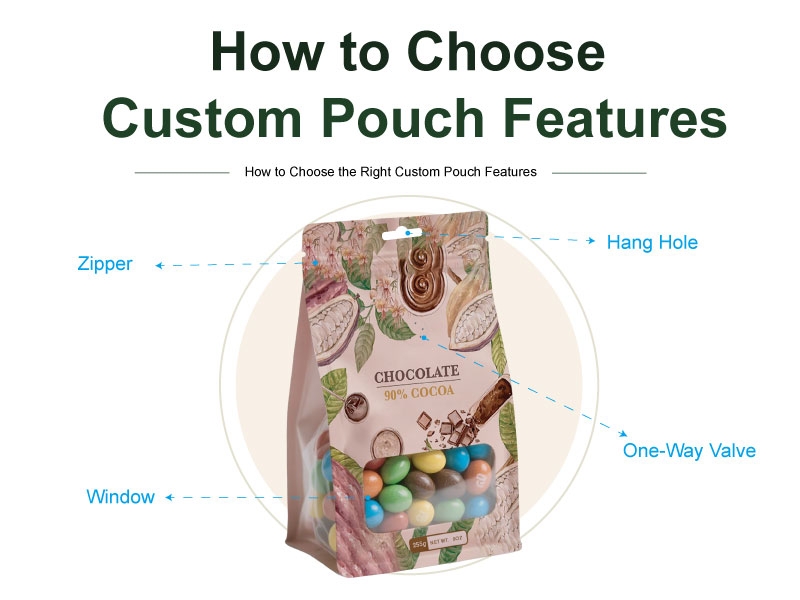
When shopping, we often see the packaging bags are equipped with various functional features, such as zippers, transparent windows, one-way valves, and hang holes. The features strike a balance between appearance and functional performance which customized for products demand.
A suitable feature is an "extra touch" for a product, enhancing its packaging performance and customer experience.
1. What Are Custom Pouch Features?
Custom pouch features refer to extra functional add-ons for flexible pouches. They are made to solve real packaging challenges instead of simply boosting visual appeal.
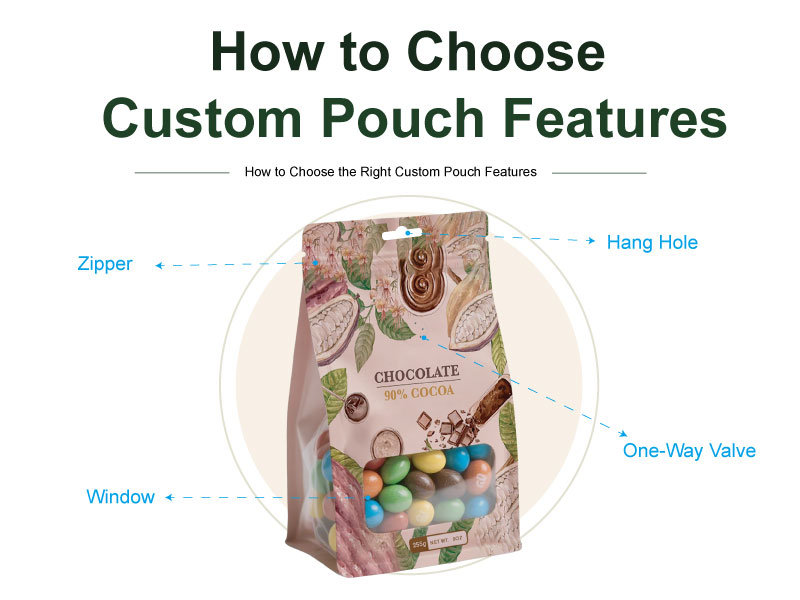
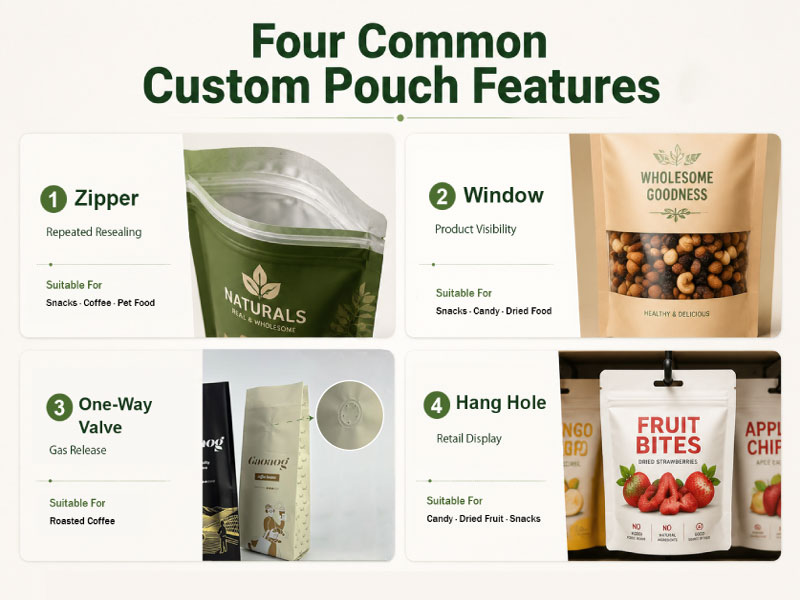
We will focus on four widely used practical features:
- Zippers: repeated resealing
- Windows: direct product visibility
- One-way valves: internal gas release
- Hang holes: retail hook display
2. How to Choose the Right Custom Pouch Features
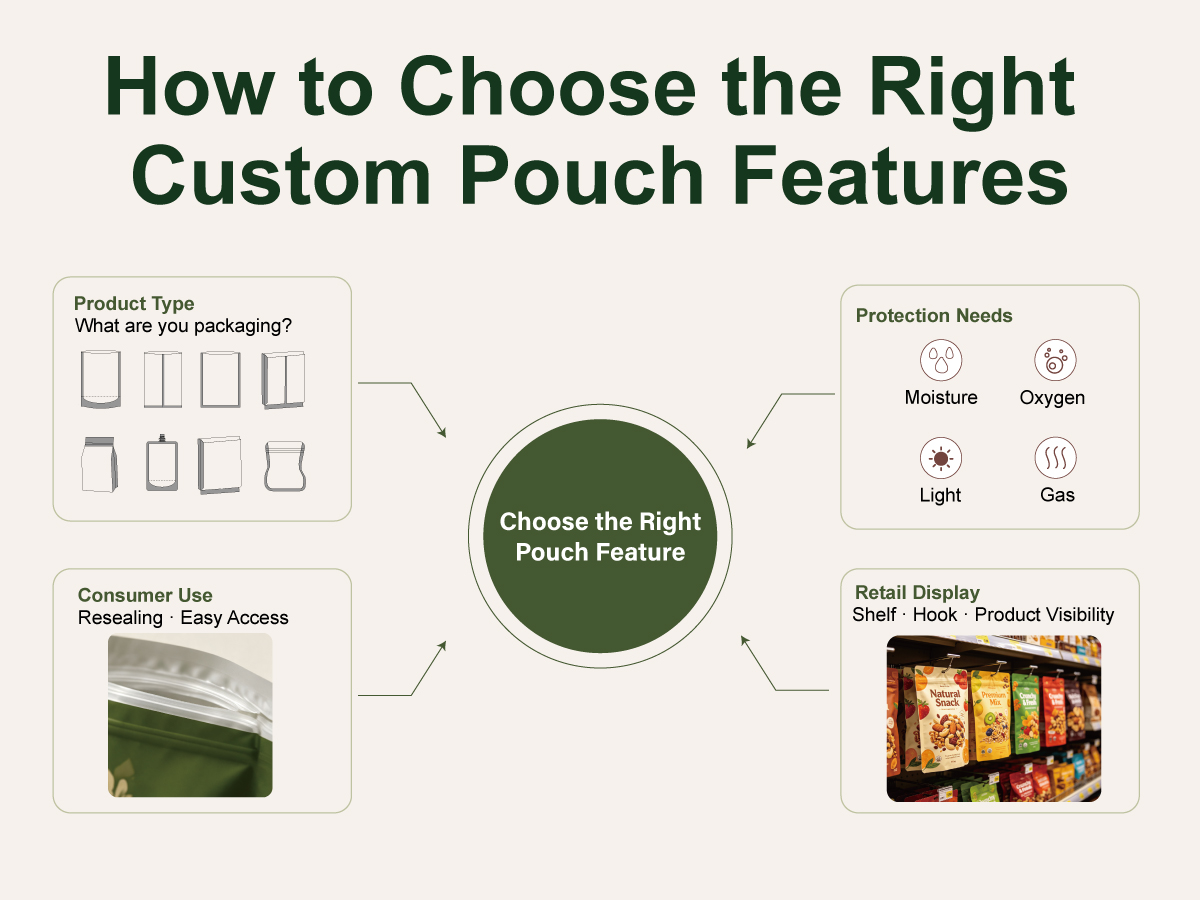
We offer many optional features for digital pouches to choose. Brands should identify genuine product needs before picking features.
Clarifying your actual packaging requirements. Fitting suitable add-ons to your product.
2.1 Product Type and Usage
What type of your product is? How customers usually use or open it in daily life? Product properties and daily usage habits directly determine whether extra functional features are necessary. Browse our industry packaging pages for recommendations.
2.2 Product Protection Requirements
Think about what your product needs to stay fresh. It may require protection against moisture, oil or UV light. Some products, after packaging, will produce gases that can cause damage to the packaging. For example, freshly roasted coffee. Such products need to be equipped with one-way valves to release the gases.
2.3 Consumer Convenience
Confirm whether your product requires repeated opening resealing or easy access. Features like zippers are not decorative features. They solve real pain points for multi-use products.
2.4 Retail and Display Requirements
Products may appear on pegboards or shelves. Adding hanging holes make it easier to retrieve.
3. Zippers: When Does a Pouch Need Resealing?
Zippers allow consumers to re-seal opened packaging. According to actual needs, zippers also have various detailed classifications. Here is a brief explanation:
- Zipper-Standard Press & Seal (PTC regular interlock zipper) : Basic press-to-close airtight strip, suitable for common snacks, dried goods and regular stand-up pouches.
- Zipper-Hook-to-Hook (double-track interlocking zipper) : Dual-hook closure stays sealed even with residual particles, durable after repeated opening. Great for pet treats and feed.
- Zipper-Recyclable: Made of identical PE/PP material as the pouch without foreign components. A preferred mono-material choice to comply with EU PPWR recycling requirements.
- For single-serve products, zippers are generally unnecessary, as the pouch is designed to be opened and used once.
4. Windows: When Should You Add a Pouch Window?
A pouch window improves product visibility but reduce light protection.
For example, when brands attend trade shows, their can use transparent windows for their packaging to meet the display requirements and attract the target buyers.
Still, windows are not suitable for every product. Avoid them for light-sensitive products that can degrade with prolonged light exposure. For these products, fully opaque pouches are the better option.
A window makes sense only when visual display brings greater benefits than full barrier performance or complete printing space.
5. Valves: When Does a Pouch Need a One-Way Valve?
The one-way valve releases gas in one direction stops oxygen and moisture from coming in. It not can let out the extra pressure inside the bag but also keeps the outside air away.
Coffee packaging usually needs a one-way valve because roasted coffee beans produce gas. If this gas cannot be released the gas that builds up inside the packaging will cause the packaging to expand the seal to break and the flavor to be lost.
6. Hang Holes: When Are They Useful for Retail Display?
Hang holes mainly use for retail hanging. More considerations should be given based on actual sales scenarios as to whether to add them. For example, dried fruits and candies usually need to be displayed on the selling racks. Through the reserved openings, they can be neatly hung on the shelves for display, which is more orderly.
This simple hanging layout saves shelf space and lets shoppers easily spot your products.
However, if your products sell in bulk or stack on regular flat shelves, standard upright pouches will fully meet the requirement. In this case, adding hang holes will not bring any display advantages but will instead increase unnecessary production costs.
7. Can You Combine Multiple Pouch Features?
You can combine multiple pouch features to match the products. This flexible combination is precisely where the value of customized packaging lies.
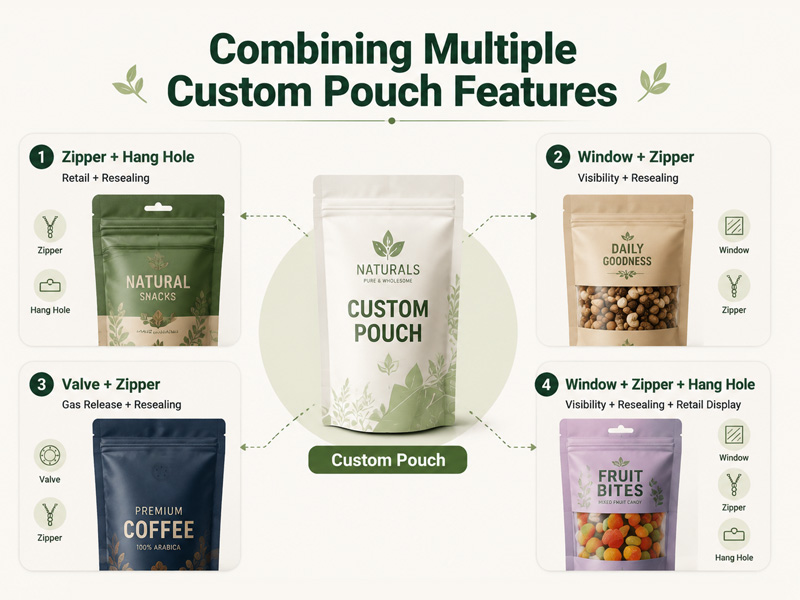
Popular combinations frequently requested by brands include:
- Zipper + Hang Hole: Great for snacks displayed on supermarket pegboards, offering resealable storage and neat hanging presentation.
- Window + Zipper: Lets customers see the product directly while keeping unused contents fresh after opening.
- Valve + Zipper: A typical coffee packaging setup, enabling gas release and convenient repeated resealing.
- Window + Zipper + Hang Hole: All-in-one design for retail snacks that require product visibility, re-closure and hook display.
The right combination depends on the product and sales environment. Every extra component raises costs, so only pick combinations that fit your actual packaging goals.
Gaoaog has extensive experience in flexible pouch features custom. We can recommend sensible combinations aligned with your product, shelf strategy and budget.
8. Common Mistakes When Selecting Pouch Features
It is easy for brands to overlook key details. Picking suitable pouch features needs careful consideration. These common missteps waste budget and even hurt product performance:
Blind feature stacking: Adding features purely for appearance without analyzing product and retail needs, resulting in extra cost with no real benefit.
- Wrong window use: Fitting windows on light-sensitive products, which shortens shelf life.
- Unnecessary valves: Installing one-way valves on goods that do not generate gas, raising packaging cost while bringing no functional gain.
- Over-combination: Packing too many features into one pouch, pushing up the price without matching actual consumer demand.
- Ignoring trade-offs: Overlooking that a window reduces UV protection and extra fittings may limit printable design space.
9. Custom Pouch Features: What Should You Choose?
As the brand owner, how should one select the appropriate packaging functional features based on the product characteristics?
Below is a decision table for selecting features for your reference:
|
Packaging Need |
Recommended Feature |
|
Resealing after opening |
Zipper |
|
Show the product inside |
Window |
|
Release coffee gases |
Valve |
|
Hang packaging in retail stores |
Hang Hole |
|
Multiple needs |
Combine features |
10. Final Tips & Conclusion
Custom pouch features solve specific packaging problems instead of being decorative extras. Custom zippers, windows, valves or hang holes are determined based on the characteristics of the product, consumers' usage habits, and sales channels. Beyond these common choices, flexible pouches support a wider range of custom optional add-ons.
If you are unsure which combination is suitable for your project, our team can recommend appropriate custom packaging functions based on your product and sales plan.
Work with us to develop custom flexible pouches with the right functional features for your products.