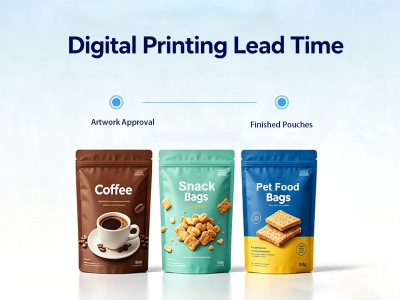
Receiving items in exquisite flexible package on Valentine’s Day, Easter, Halloween and Christmas such special festivals brings joy. Shoppers also enjoy picking their favourite limited-edition package to make daily life more interesting. Products placed in specially designed packaging create a warm and intense atmosphere.
Seasonal and limited-edition pouches let brands launch seasonal or limited products that win consumers’ favor. These custom orders require careful alignment on artwork, quantities and launch timelines before products go on sale.
1. Why Seasonal and Limited-Edition Orders Need Different Planning
The order of seasonal and limited-edition packaging differs from the normal orders. The regular replenishment order serve for products that are continuously on sale. Products of this type have long sales cycles and stable packaging designs.
Seasonal and limited-edition orders affected by festival or short-term activities, show key characters:
1.1. Limited sales period
Usually, regular orders have a stable sales period. Seasonal and limited-edition package orders follow a firm deadline. Once the sell window is missed, package may lose much of its value. Holidays will not wait for your timeline.
For this reason, the full production cycle must be planned backwards from your product launch date. This covers every phase: artwork approval, sampling, production and shipping.
1.2. Multiple design versions
Special and diverse designs are used for seasonal and limited edition packaging. A series thematic visual design has independent artworks. It takes more time and energy to manage many versions. If you have ever experienced customizing regular packaging as well as seasonal or limited edition packaging, you may be able to understand that the communication and quality inspection workload for such projects is significantly higher than that of ordinary restocking.
1.3. Lose core value after special periods
Seasonal customized packaging features exclusive patterns for specific festivals or events. After the event, these packages are generally not usable for other products or for the next event. Ordering too little can lead to stockouts that are difficult to resolve quickly. Too large quantity may lead wastes.
Therefore, it need consider more details to decide how many quantities should be ordered for package. Balance the risk of stockouts and the loss from packaging material waste.
2. How to Choose Pouch Formats and Plan Seasonal Designs
Select the suitable pouch formats and confirm the limited-edition design with your supplier. Some seasonal packaging may be reused. Limited-edition runs follow fixed holiday sales windows and are not sold year-round.
Packaging demand varies, so each project needs a tailored custom plan. Gaoaog supports pouch format selection and professional design compliance verification.
See the examples below:
|
Product Scenario |
Factors to consider when planning |
Formats and Design Recommend (reference only) |
|
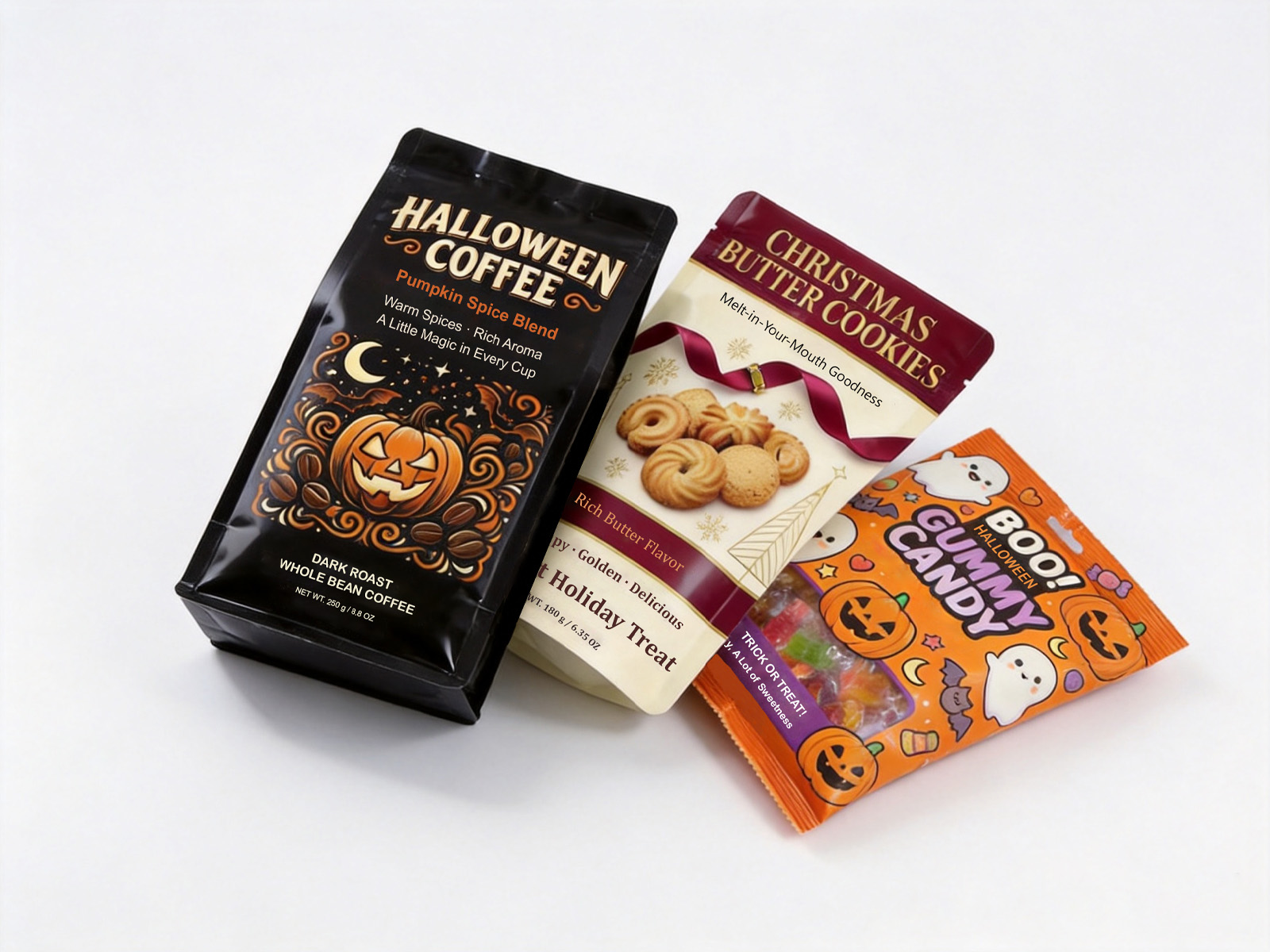
Christmas or Halloween Candies |
Multiple artworks, single order quantity and definite release date |
|
|
Seasonal Snacks |
Moisture-proof requirements, product specifications, different flavors SKUs |
Flat pouch/ Stand up pouch + Unique SKU designs |
|
Holiday Coffee or Tea Products |
Aroma and moisture protection, bag type and packaging functions |
Flat bottom pouch/ Side gusset pouch + calming scene artwork |
|
Limited edition Pet Snacks |
Product protection, packaging size and different product versions |
Flat bottom pouch + Limited-edition design elements |
For instance, Gaoaog produced seasonal and limited-edition Christmas pet food packaging. Like the stand-up pouches for dog treats and flat-bottom bags for cat food. Designs carry festive holiday elements and maintain consistent brand visual standards. It is ideal for multi-SKU seasonal products launch with digital printing.
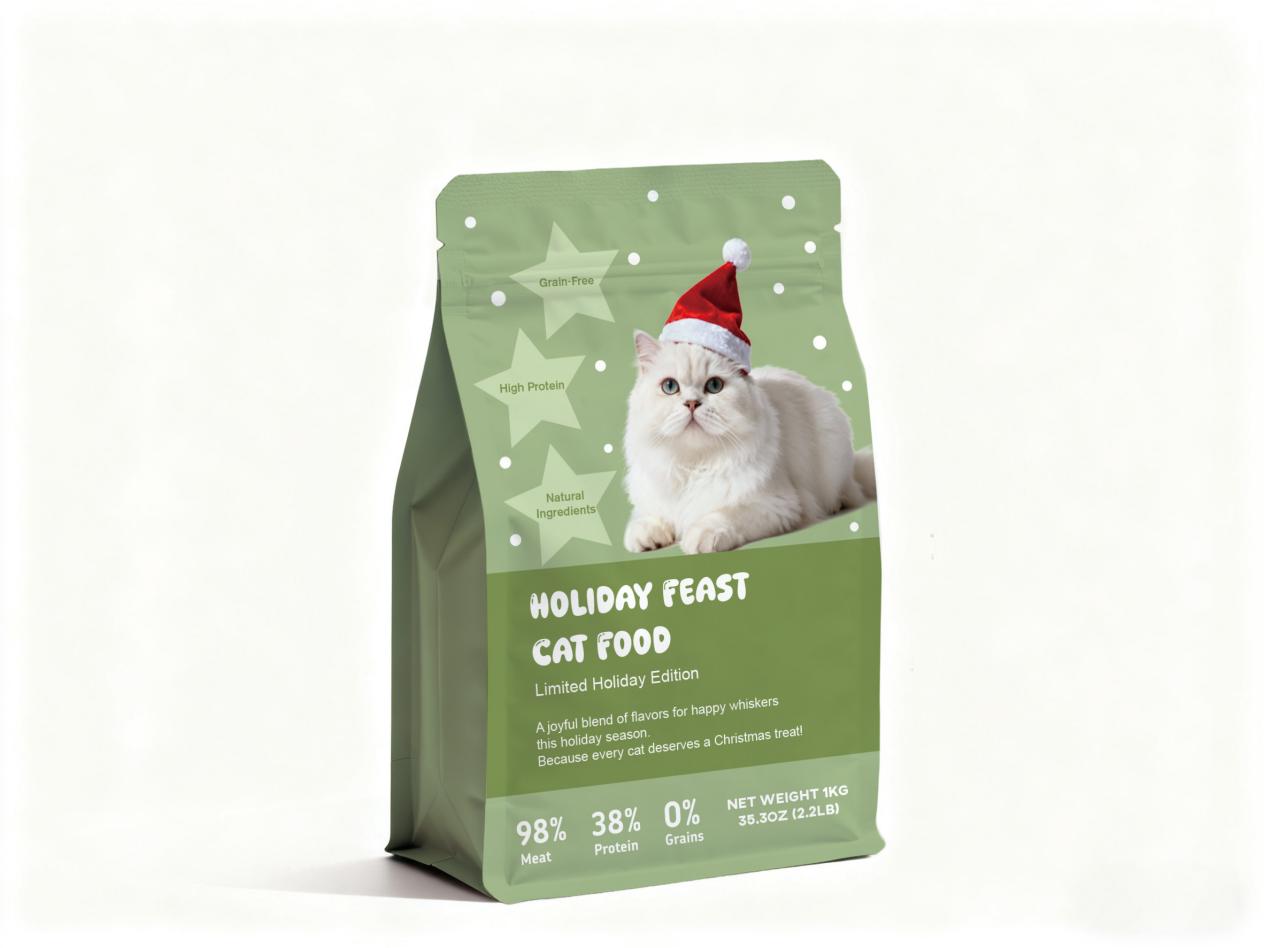
>> Holiday limited cat food flat bottom pouch
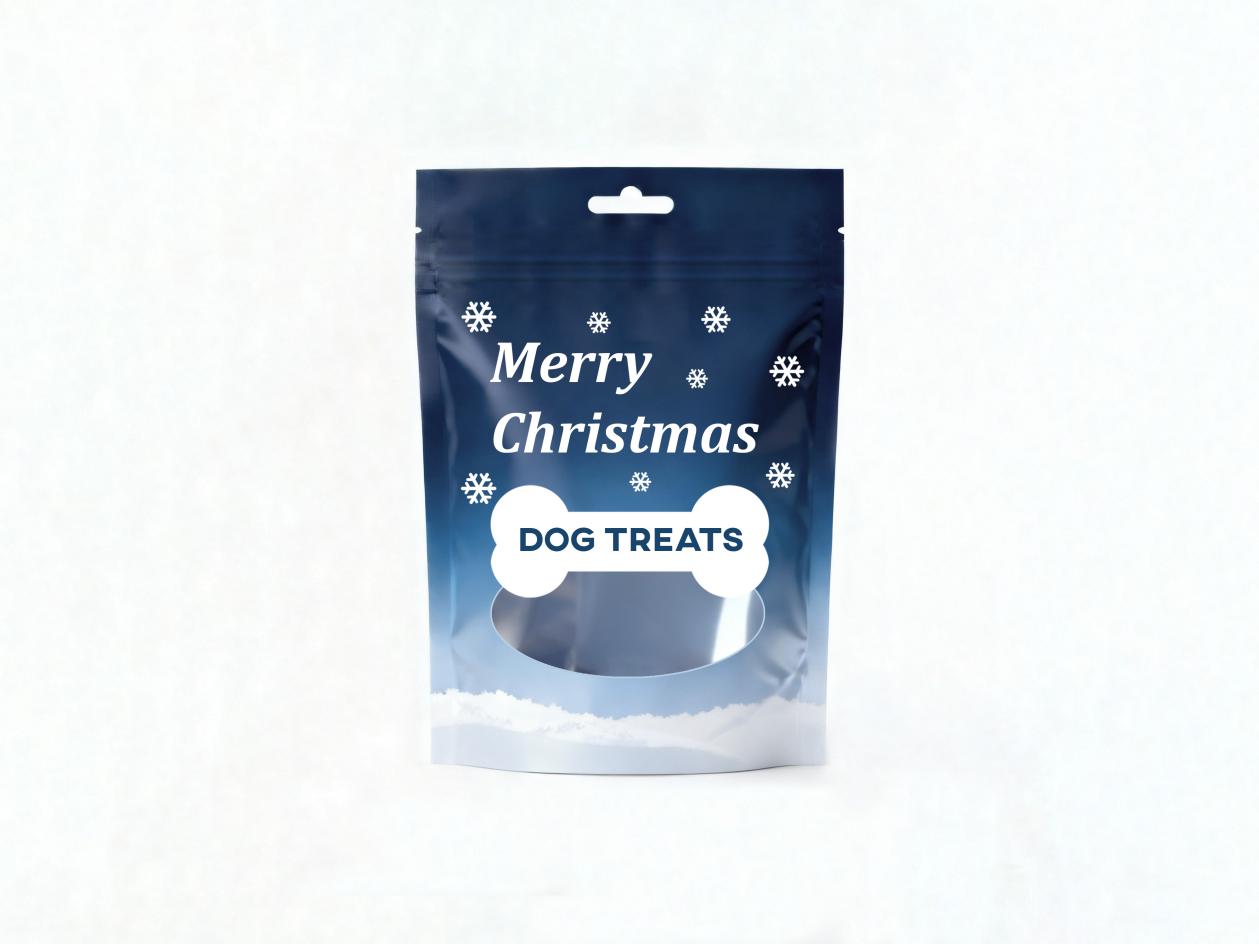
>> Christmas dog treat stand-up pouch
3. How to Plan Quantities for Multiple SKUs and MOQ
Seasonal and limited edition packaging may carry inventory risks due to the uncertain sales situation during special periods. So how to plan the quantities?
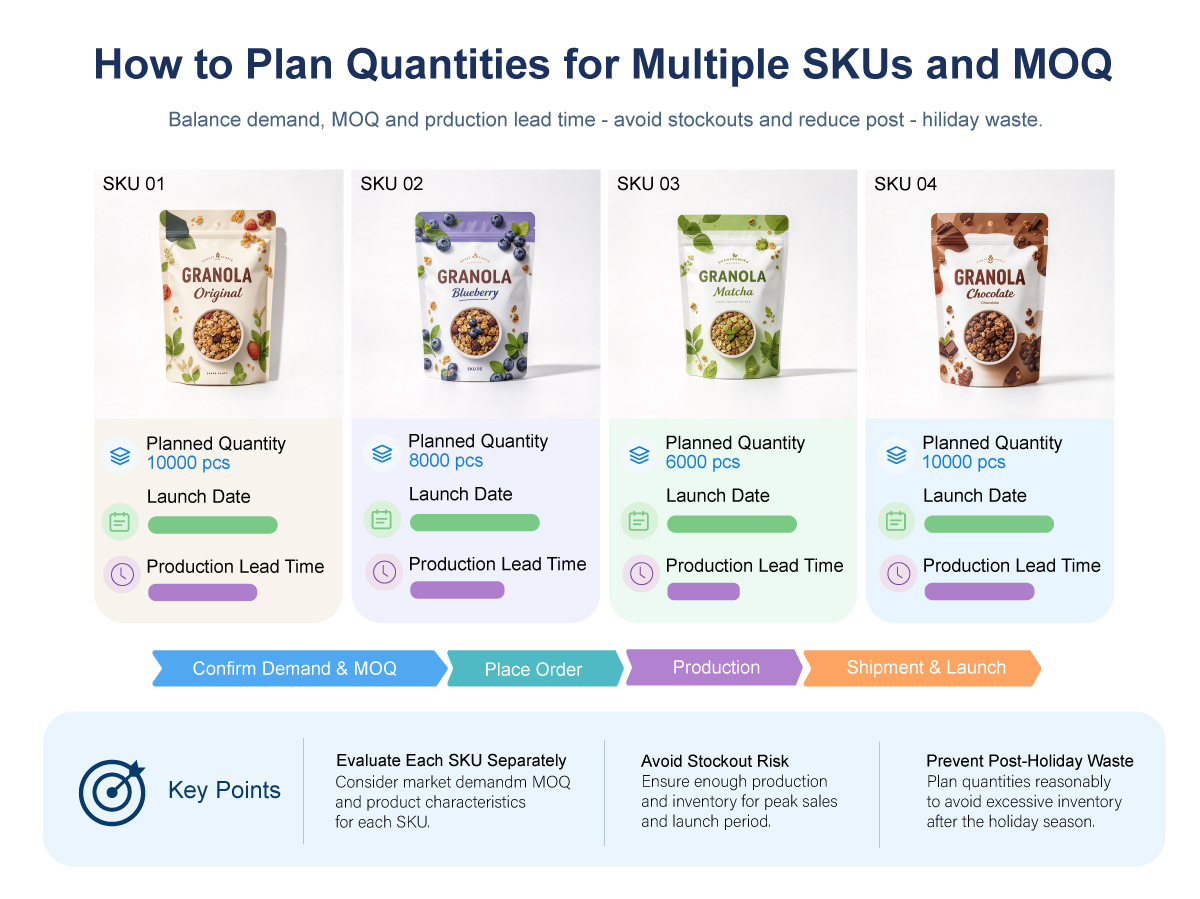
3.1.Confirm the SKUs and artwork versions
Sort out the whole SKUs and independent design drafts. You need to spend time and effort managing multi-SKU packaging projects. The more styles there are, the greater the workload for draft review and schedule coordination. Select and reserve necessary styles for your product.
3.2.Estimate the demand for each individual SKU instead of total quantities
The sales performance of different seasonal styles varies significantly. It is common that some styles have a considerable sales volume, while others are merely used to enrich the product line with low sales. Estimating the sales volume based on individual SKUs can effectively reduce the risk of stock shortages for best-selling products and excessive stock accumulation for unpopular items.
3.3.Ensure MOQ based formats, size, materials and printing plans
Confirm the realistic minimum order quantity for each SKU. Do not rely on the advertised general figures to determine the MOQ. Provide the complete specifications to the supplier as soon as possible.
3.4.Consider the first-batch orders and potential orders
Consider the first batch of orders and potential orders, but do not assume that unlimited additional orders can be made or that excess packaging versions can be reserved for future sales. Balancing the risk of stock shortage and the risk of packaging waste before placing the order.
4. How Artwork Changes Affect Custom Pouch Orders
Design is the soul of packaging.
First, confirm the artwork of each SKU before production. Artwork forms the foundation of flexible pouch manufacturing.
Second, cross-check the files and orders details. Avoid mismatches in version, flavor and quantities.
Third, lock in all version and quantities pre-production. Once production starts, artwork cannot usually be revised. Any design changes after quotation need reconfirm new price and lead time. These adjustments may delay packaging production.
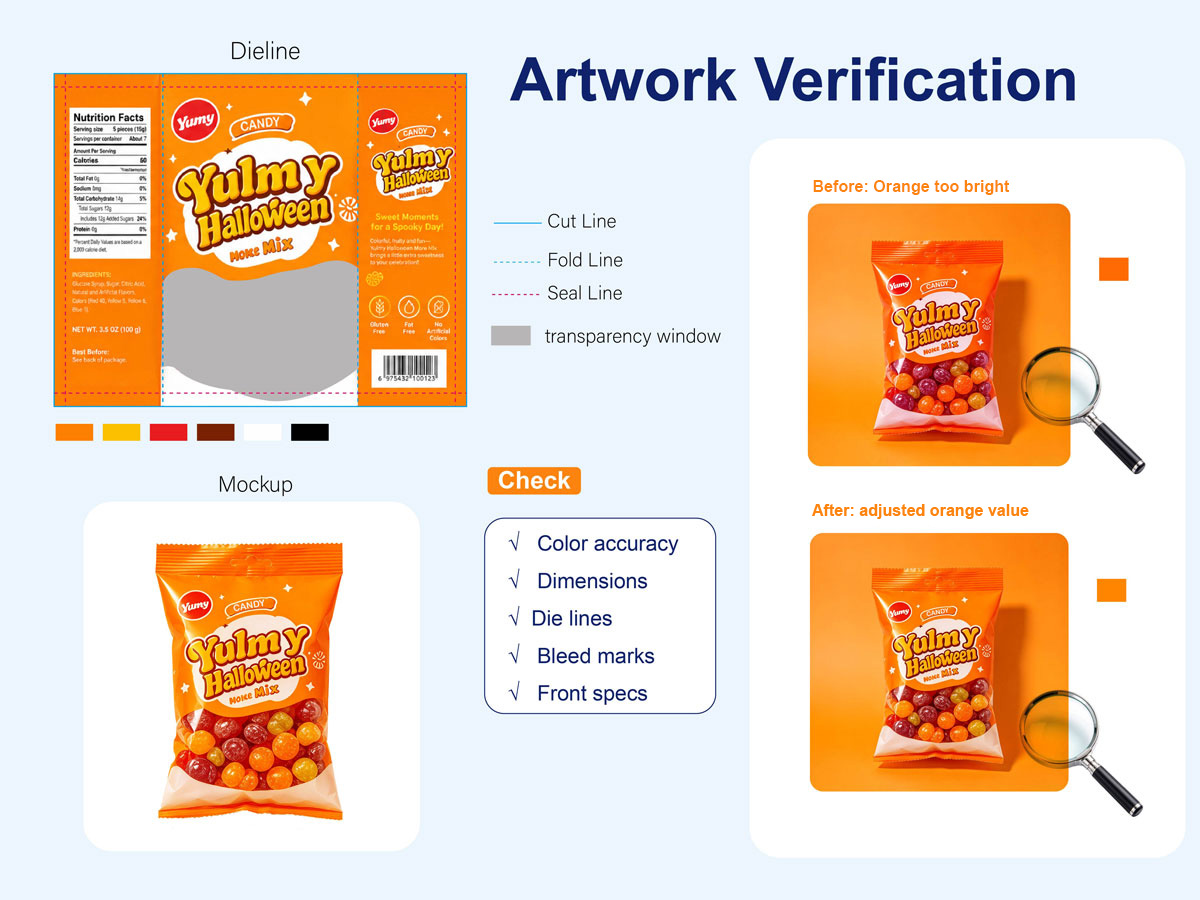
Practical example: For Halloween candy pouch orders, our design support team verified artwork. They checked color accuracy, dimensions, die lines, bleed marks and font specs. During mockup review, the team caught an issue where the orange print appeared overly bright on screen. We adjusted the color values and confirmed all font styles before sending files to production. This pre-production review step prevented costly reprints and kept the seasonal order on schedule.
5. Should You Use Digital Printing or Rotogravure for Seasonal Orders?
Which printing method is more suitable for your limited packaging order?
Digital printing and rotogravure printing offer their distinct benefits suited to different project requirements.
Digital printing: Multiple SKUs, small batch production, short-term orders.
Rotogravure printing: Large volume orders, higher minimum order quantity, stable and repeatable production of products.
The choice of printing methods also needs to take into account the actual price, quantity, structure and factory schedule. Digital printing is not always cheaper or faster in all scenarios.
6. How to Plan Production Timelines and Reduce Leftover Packaging
Brands must complete packaging compliance checks and product listings within tight timelines. Any product-step mistake may miss the best sell period or inventory buildup.
You can schedule the production plan by reversing timeline approach. Start from your target delivery date and reserve buffer time for shipping.
This method is only a suggestion. Any flexible package workflow time is not fixed.
Peak seasons can cause warehouse and logistic congestion. Shipments can be delayed even after production completes.
Control leftover packaging risks before ordering. Double-check order quantities, finalize artwork versions early. Assess if custom packaging can be reused after the campaign.
7. Seasonal & Limited-Edition Custom Pouch Order Checklist
Conclude with a concise order checklist:
- Product specs: pouch style, dimension, material structure and addon
- Per-SKU: finalized artwork and assigned order quantity
- Full artwork sign-off completed
- Factory confirmation secured for MOQ, pricing and production timeline
- Target arrival date planned with shipping buffer
- Backorder / split shipment terms pre-agreed
8. Conclusion
Seasonal and limited-edition projects do not focus on pursuing the lowest unit cost through large orders. You should balance multi-design flexibility, on-time delivery, accurate quantities and less waste inventory.
Gaoaog leverages digital printing’s plate-free production. Confirm pouch style and materials, verify artwork for all SKUs. This supports small-batch production for seasonal or limited-edition packaging across multiple SKUs.
If you want to costomize seasonal packaging or limited-edition packaging, be free to contact us!
FAQ
1. How early should I order seasonal flexible packaging?
Advance planning is critical. Custom seasonal packaging involves unique artwork and specialized printing. While factor in possible shipping delays and the pouches filling time after arrival. Required lead time depends on SKU volume, printing type, pouch complexity and factory availability. You can begin artwork and order planning months before launch; simpler projects allow shorter timelines. Any delays may shrink your selling window.
2. What products should I order limited-edition flexible packaging?
Candy, snacks, seasonal fruits, premium pet food, cosmetics and beauty... These products placed in unique packaging helps attract shoppers for a fixed marketing window. They features in short promotional cycles, seasonal holidays or special campaign launches. Custom printed pouches are designed for specific themes; leftover stock has almost no reuse value once the promotion ends.
3. How to avoid excess seasonal packaging inventory?
You can review historical sales data to build forecasts. Estimate demand per SKU instead of only using total campaign volume. Cross-check forecasts against MOQ, artwork count and production limits. For uncertain sales, adopt phased production with conditional reorders rather than full one-time production.