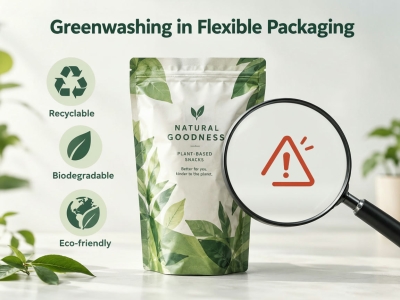
Sustainability is in the spotlight today. Many brands purchased flexible and sustainable packaging to solve packaging recycling challenges.
However, they faced risks from sustainable packaging claims on their websites and Amazon. Overstating package benefits and other non-compliant behaviors can carry heavy costs. Greenwashing may lead to listing removals, EU cargo seizures and FTC investigations.
Sustainability stretches across a product’s entire lifecycle. It covers material picks, carbon impact, recyclability and waste reduction. Flexible packaging cannot be deemed sustainable based on just one of these factors.
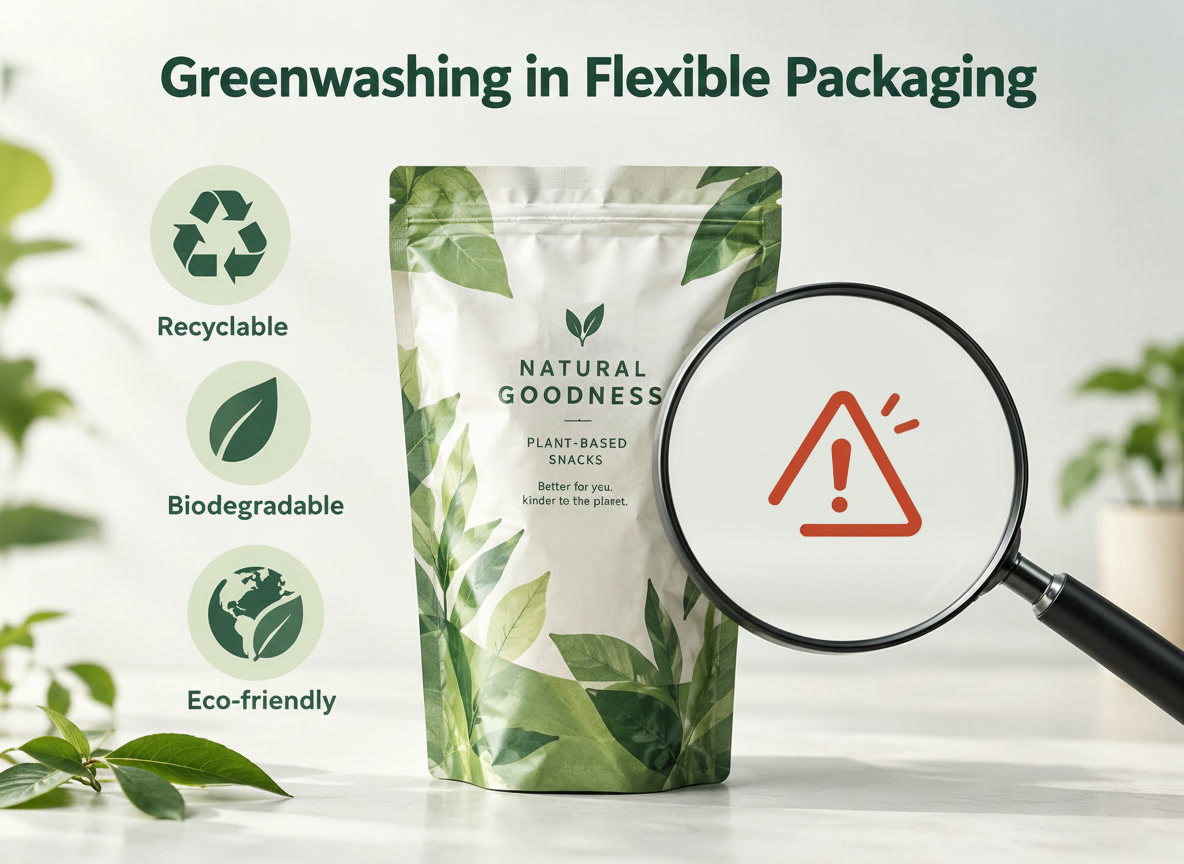
1. What Actually Counts As Greenwashing For Flexible Packaging
Packaging greenwashing, as the name suggests, is misleading marketing that presents packaging as “green”. Packaging leads buyers to believe that packaging delivers benefits, beyond what real evidence can support. Many shoppers choose products based on packaging or ads. But only to find the actual packaging fails to match those claims.
Material compliance does not equal marketing claim compliance.
For cross-border custom flexible packaging, brands do not only need to check if materials are eco-friendly. The whole supply chain must be evaluated.
- Actual attributes of the packaging: Material structure, ink, adhesive, barrier performance, accessories
- Evidence provided by the suppliers: Material specifications, test reports, certification scope, applicable conditions
- Statements made by the brand externally: Packaging labels, product pages, advertisements, social media copywriting
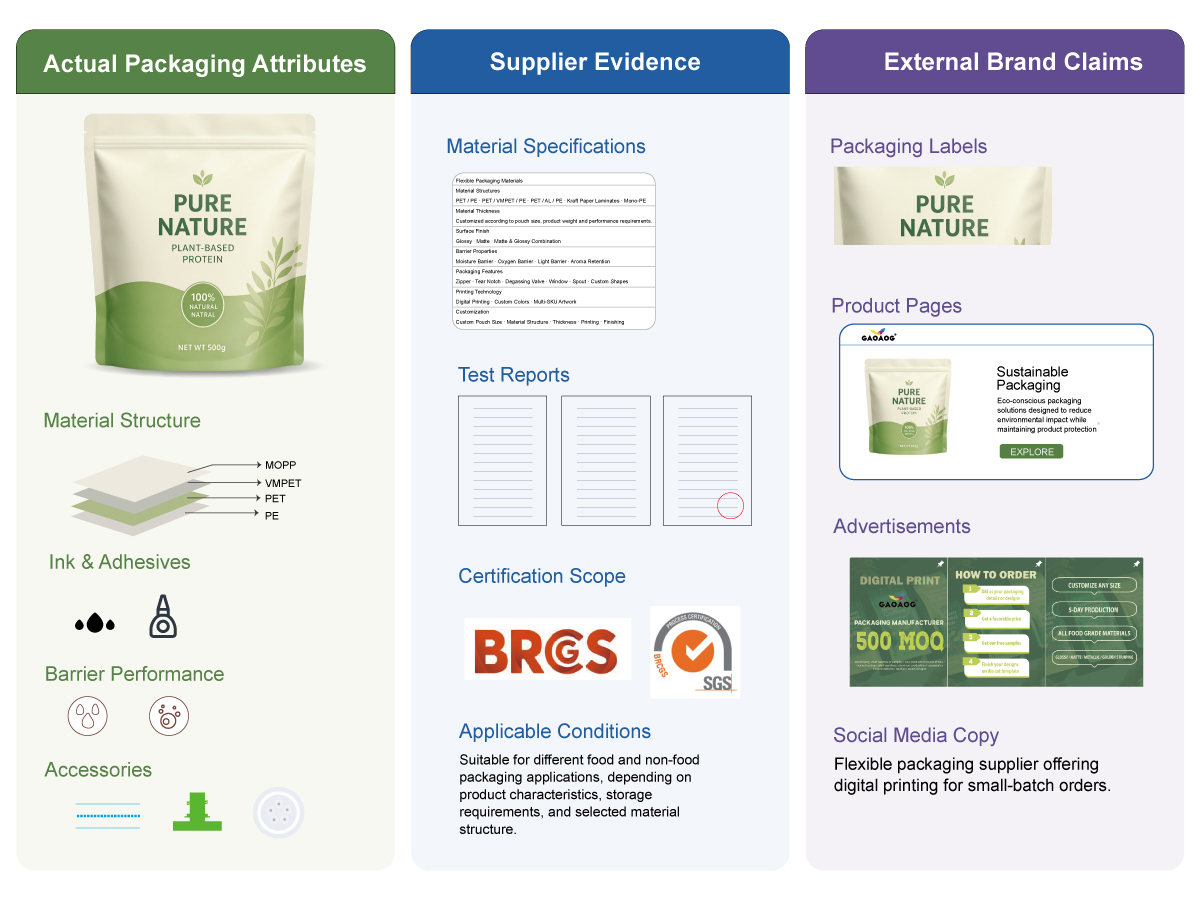
Even if you choose the right base material, if the wording on the printed packaging is inappropriate, or the textual descriptions on Amazon or the brand's website are not precise, it can easily fall into greenwashing trap.
For example, brands use the standard mono-PE pouches, but print “100% eco-friendly”. If the target market has no recycling setup for flexible plastics. The pouch cannot be recycled locally as advertised. It will result in market penalties or damage to the brand's reputation.
2. Common Sustainable Packaging Claims And Where They Go Wrong
Sustainable packaging claims may mislead buyers. Knowing these pitfalls helps you avoid them. Here are common sustainable package claims.
2.1 Recyclable
Material theory of recyclability vs. Actual local recycling infrastructure.
A full recyclable pouch includes materials, accessories, and the market recycling system. Look at the mono-material package, which is produced specifically for the US market. It can deliver actual recyclability.
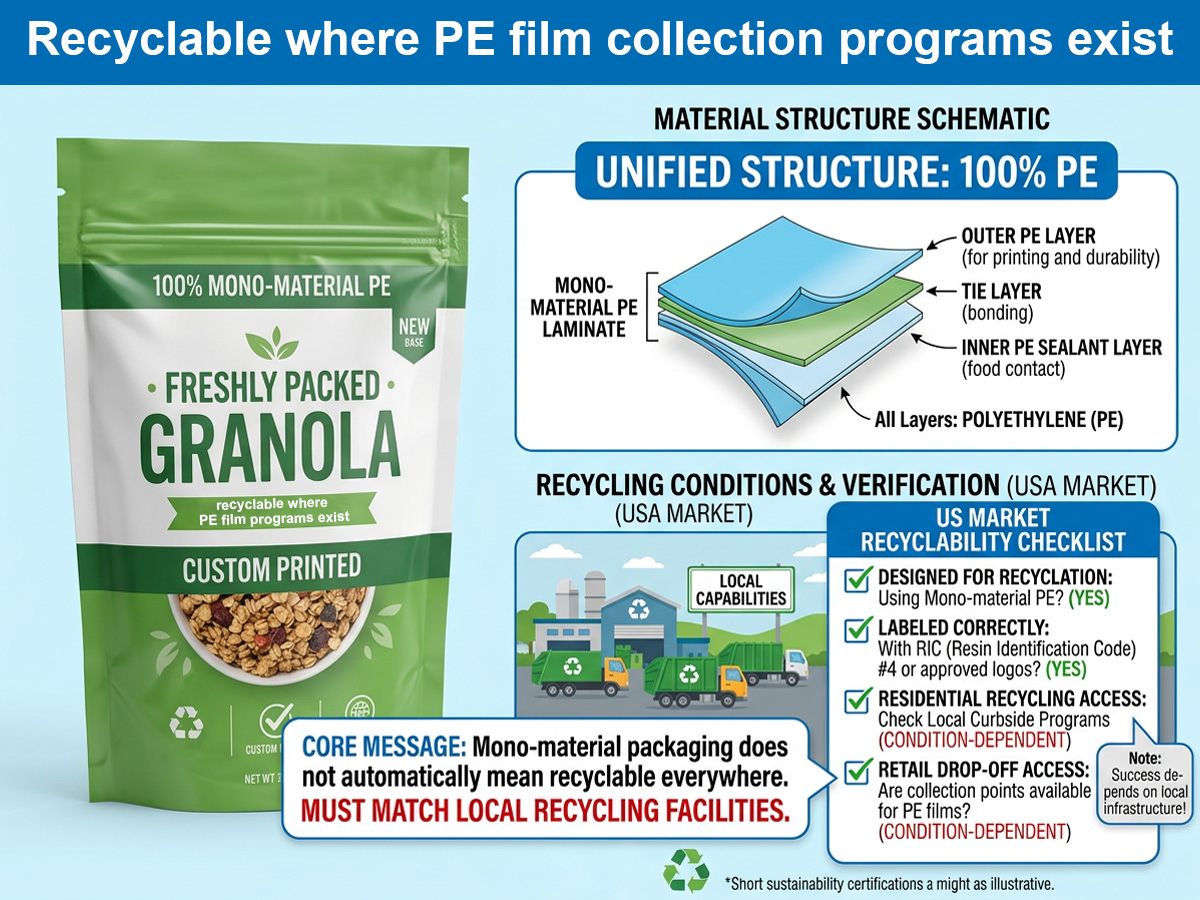
Under the FTC Environmental Claims: Summary of the Green Guides, marketers must verify recyclability claims when over 60% of consumers in the target market lack access to recycling facilities.
2.2 Recycled-Content
The common pitfall: Just write "containing recycled materials" without indicating the percentage or certification standards.
For example:
- US Market: You must list the recycled weight share if it is not 100% recycled.
- EU Market: Only materials that are collected for recycling after consumption can be classified as PCR.
The specific regulations need to be referenced to the “green guide” specially issued by your target market. Here only a few are listed.
2.3 Material Reduction
Common pitfall: Claiming thinner packaging uses less plastic without a clear comparison baseline.
Thinner films can reduce plastic use. But claims like “less plastic” are vague. Specify your comparison clearly. For example: “This pouch uses 30% less plastic than our original 100 μm mono-PE pouch.”
2.4 Compostable
Clear distinction: Industrial compost vs Home compost.
Most compostable packaging materials only work for industrial composting. Many brands see a “compostable” certification for packaging materials and then label the packaging “home compostable.” This is a common greenwashing risk in flexible packaging. If you put these bags in a home compost bin, they will not break down quickly.
3. Why So Many Eco-Claims End Up Misleading
Pursuing sustainable packaging without clear standards often backfire. You might fixate only on materials, components or local market conditions. This narrow focus can make your recyclability claims misleading to customers.
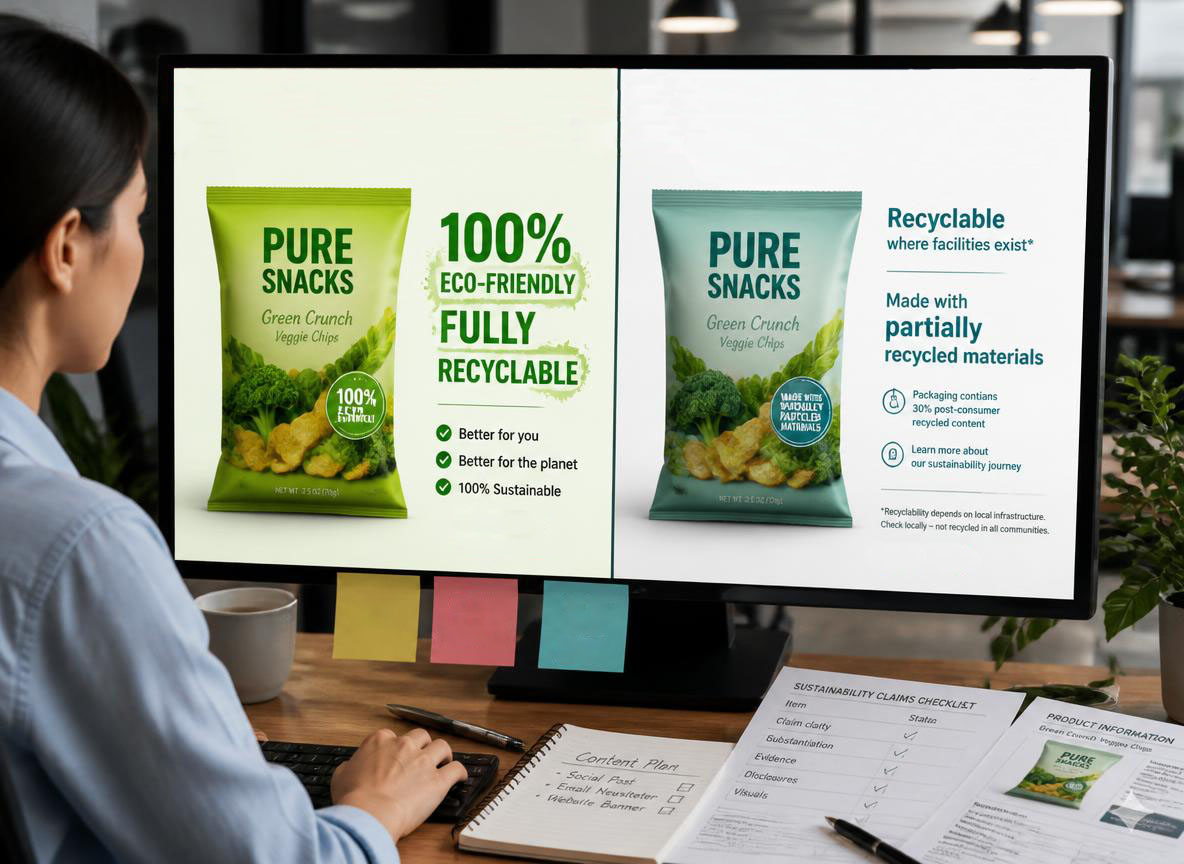
Common pitfalls include:
- Ignoring local recycling conditions: If you ignore recycling conditions, a material might look recyclable on paper. Recycling facilities that can handle that material may not exist in the target market. It is important not to overlook recycling conditions.
- Overlook packaging components: Do not overlook packaging components. Check the status of every part of the packaging. A mono-PE pouch that has zippers or spouts which're not recyclable will not be recyclable. Provide sustainability explanations.
- Make unsupported claims about multi-layer films: PET/AL/PE laminate can give barrier performance. This structure is hard to recycle. Do not call these pouches recyclable unless you have evidence that the target market can recycle them.
4. What Evidence You Need To Back Up Your Packaging Claims
A supplier's verbal promise cannot back up environmental claims. You need tangible documented evidence.
Before placing orders, request certain materials from the packaging factory. Do not seek them out at the last minute when random inspections happen. In the subsequent promotion efforts, the risk of falling into green marketing pitfalls can be minimized as much as possible.
4.1. Material specification sheets
List out the full packaging structure. Note down the material for every layer, such as mono-PE or MDO-PE/EVOH/PE. Check materials for accessories like zippers and spouts. This helps verify the actual material composition. Distinguish mono-material packaging from multi-layer structures.
4.2. Test reports
The real test data about barrier performance, recyclability compatibility, migration is a strong verification for material properties. They can also serve as evidence to support the packaging claims. Which makes your products more likely to gain customer trust.
4.3. Third-party certification documents
Make sure you keep certifications that match the packaging environmental protection claims. Certifications such, as ISO 14021 and EN 13432 are examples. Confirm the certification scope covers this bag type. This can serve as a third-party endorsement, and the regulatory spot checks can present it.
4.4. Recycling infrastructure supporting information
The proof of the recycling channels in the target market demonstrates that the bag type can indeed be recycled locally. This can support the “recyclable” claim to address the FTC/EU verification regarding the recycling infrastructure.
4.5. Objective comparison benchmarks for comparative eco claims
Marketing content should be honest. Light packaging and lower carbon footprints always appear in the promotional copy. These contents must have clearly state references. Do not use overstated language will help you avoid greenwashing.
Want to know more about the certification documents?
→View the [Quality Assurance & Regulatory Compliance Page]
5. Rework Risky Phrases: Real-World Copy For Flexible Pouches
Many customers simply copy the environmental slogans and print them on the bags. In the end, they pay a heavy price.
|
Scene |
Misleading Copy |
Compliant Copy / Key Notes |
|
Mono-PE stand-up pouch |
100% eco-friendly stand-up pouch |
Mono-PE stand-up pouch. Check local collection program before use. |
|
Fully recyclable spout pouch |
Spout or zipper uses PE material for recyclability. |
|
|
PCR recycled-content |
Contains recycled plastic |
Made with XX% post-consumer recycled PE resin (by weight), meets ISO 14021. |
|
Compostable pouch |
Total compostable flexible pouch |
Industrial-compostable pouch (EN 13432). Not suitable for home compost bins. |
|
Comparative environmental claim |
Greener than regular plastic bags |
Mono-material PE pouches have better post-consumer recyclability than multi-layer laminated pouches. |
All claims about sustainability rely on local waste systems and the limits of the products. Check the material structure before you say something is recyclable. Any claims need to follow the right standards and include needed details. These cover recycled content, compostable items or eco-friendly comparisons.
6. Pre-Launch Checklist For Custom Flexible Packaging Projects
Spot the greenwashing while preparing related verification. Conduct checks along the production timeline.
6.1 Vet your packaging supplier before placing orders:
- Ask for laminate details of the “recyclable pouch”: film layers, zipper or spout material. Confirm all components meet mono-material rules.
- Request material spec sheets, test result or certification. Don't trust verbal promises easily.
- Confirm which recycling system the pouch qualifies for: store drop-off or curbside collection.
- For spouted recyclable pouches: confirm size limitations for accessories
6.2 Before you finalize packaging artwork
- Remove broad buzzwords: eco-friendly, green, zero-waste without qualification
- Add clear qualifying statements beside every environmental claim. Do not hide these details in small print.
- Recycled-content claims show exact percentage and relevant standard
- Check whether zippers, spouts match the claimed recyclable structure
6.3 Before you publish product listings & marketing assets
- Packaging print copy matches website/marketplace listing wording exactly
- Avoid overstating partial benefits as full-package environmental performance
6.4 Cross-border compliance check for US & EU or other target markets
- US: Align with FTC Green Guides; keep supporting documents on file for inspection
- EU: Follow EU Green Claims Directive requirements, all environmental assertions must be verifiable
- Retain material sheets, test reports and supporting evidence for at least three years.
Conclusion
Green marketing helps your packaging stand out. Making claims that are not backed up can hurt your brand in the long run. Stay away from greenwashing.
As a brand, getting sustainable soft packaging does not mean that the promotion your advertising is automatically okay.
Remember to check if your environmental claims meet the rules. It need to be finished when you choose suppliers and test samples. Don't wait until after you start making a lot of products to find out there is a problem.
Need custom flexible packaging?
We manufacture stand-up pouches, spout pouches, flat-bottom pouches and more.
[Visit Our Sustainable Packaging Product Page]
→ Request Custom Proposal & Quotation
FAQ
1. If I use mono-PE pouches, can I just mark them “100% recyclable”?
It is decided by the final pouch’s accessories, materials and local recycling system. You must confirm all packaging details. Only then can you confirm the pouch is recyclable.
2. What documents should I ask my flexible-packaging supplier for eco-claims support?
You can request target-market relevant documents from you supplier:
- Full laminate & component material breakdown
- Material specs, recycling and migration test reports
- Valid third-party certifications
- Local recycling infrastructure proof
Never accept only oral promises.
3. What makes a recyclable claim misleading on flexible laminated pouches?
Brands looking for recyclable packaging may get trapped in greenwashing risks. Flexible pouch recyclability standards vary across countries and regions. Some parts of the pouch being recyclable does not make the full pouch recyclable in your target market. All these points deserve your attention. Ignoring these details is exactly how brands end up with misleading green packaging claims.
4. What types of recyclable pouches we can support?
We are a highly experienced custom flexible packaging supplier. Support many kinds of pouches. Such as flat pouch, fin seal pouch, gusset pouch, stand up pouch, flat bottom pouch, quad seal pouch, spout pouch.
Have questions on packaging compliance or custom‑project requirements? Connect with our packaging technical advisors.
👉 Inquire About Your Packaging Solution