
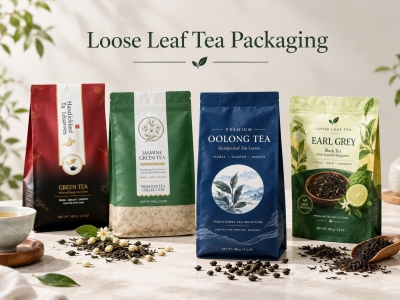
Imagine a pleasant afternoon: you open the tea pouch, take some leaves and brew a cup. This familiar ritual plays out worldwide, though loose-leaf tea habits differ greatly between markets. These daily consumption patterns directly shape how you select your tea packaging.
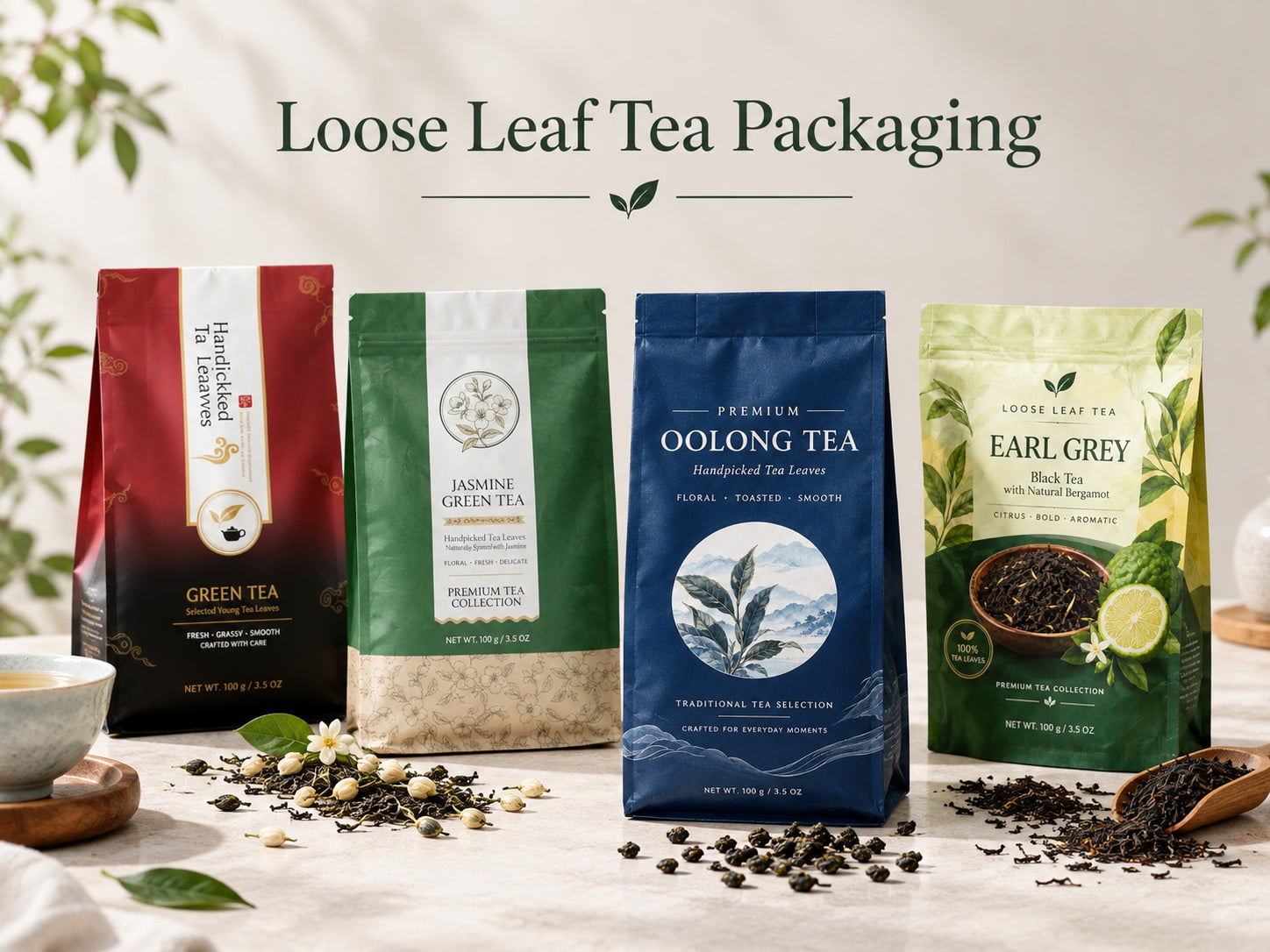
Most tea brands turn to flexible packaging. It keeps tea fresh, offers practical user-friendly features, and gives brands plenty of space for branding.
Your choice of material and barrier properties can make a real difference to how loose-leaf tea holds up in storage—both its flavour and its look over time depend on these factors.
What Protection Does Loose Leaf Tea Packaging Need?
Loose-leaf tea needs flexible packaging with oxygen, moisture, light and odor protection.
Oxygen Protection
Oxygen can affect the freshness, flavor and aroma of tea. For sensitive teas, a good oxygen barrier can help maintain quality during storage.
Moisture Protection
Tea is affected by moisture easily, wet tea leaves become soft and lose their original flavor, so moisture barrier is important.
Light Protection
For tea that is sensitive to light, the ability to block light will influence the choice of packaging structure. Most tea is packaged in opaque containers.
Odor Protection
Loose-leaf tea loses its aroma easily and has a strong adsorption property. Once open for a long time, absorbing surrounding odors will damage the tea flavor. Packaging needs to lock the original tea aroma and prevent tea from absorbing other odors.
However, not every loose-leaf tea requires the same level of protection. It determined by the leaf tea actual protection demand.
How to Match the Barrier Level to Your Tea
The key question is not "Does tea require high barrier properties?", but "What level of barrier does your tea need?".
Tea Sensitivity
Different types of tea have different packaging protection requirements. Consider your tea's characteristics when determining the required barrier level:
- Highly aromatic tea
- Delicate tea
- Flavor-blended tea
- More stable tea
Target Shelf Life
The longer your target shelf life, the higher barrier protection your packaging needs.
Storage & Distribution Conditions
Tea does not simply sit on retail shelves. After purchase, consumers will also store it. Loose tea is usually non-disposable and opened multiple times for brewing. Repeated opening means your packaging must maintain consistent protection over time. Temperature, humidity, transit conditions and sales channels all factor into your packaging selection.
Which Material Structure Is Right for Loose Leaf Tea?
The appropriate structure depends on the sensitivity of the tea, the target shelf life, the filling process, and market demand.
The table below matches common material structures to tea-packaging requirements:
|
Material Structure |
Main Advantage |
Suitable For |
|
PET/PE |
Basic protection + good printability |
Less sensitive tea / shorter shelf life |
|
PET/VMPET/PE |
Strong barrier light protection |
Retail and premium tea |
|
PET/AL/PE |
Very high barrier |
Highly sensitive tea / long shelf life |
|
Mono-PE |
Recycle material structure |
Brands prioritizing recyclability |
|
Kraft-based laminate |
Natural appearance + flexible structure options |
Premium / natural-positioned tea |
At Gaoaog, we can recommend a suitable material structure based on your tea packaging requirements.
Which Pouch Format Is Right for Loose Leaf Tea?
Flexible packaging is ideal for loose-leaf tea. Fin seal pouches, stand up pouches, and side gusset pouches are often chosen.
Suitable for:
- automated filling and packing
- high-volume production
- small to medium pack sizes
Suitable for:
- retail tea
- small to medium pack sizes
- strong shelf presence
- zipper/reseal closure
Suitable for:
- bulk / specialty tea
- heavy fill weights
- traditional tea presentation
Rollstock vs. Pre-made Pouch
For machine filling, tea packaging can use either rollstock film or pre-made pouches. Many tea producers run automated filling operations, so rollstock becomes their pick. Pre-made pouches work better for small-batch runs, such as retail tea shops.
In short:
- Pre-made pouch → flexible for smaller runs / presentation / custom formats
- Rollstock → better suited to automated high-volume filling
Which Features Does a Loose Leaf Tea Pouch Need?
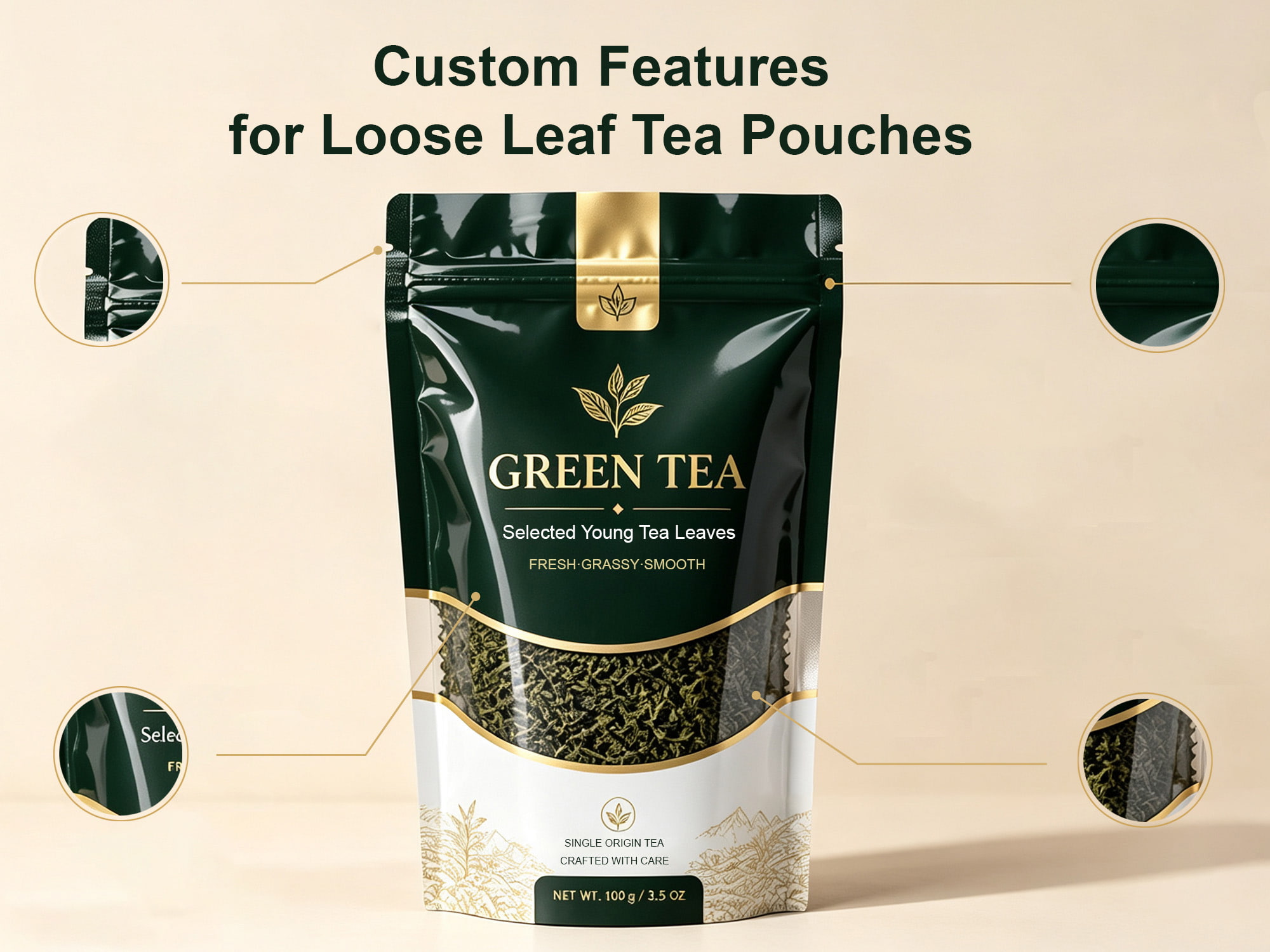
1. Opening and Resealing: How Will Consumers Use the Pouch?
Zipper / Resealable Closure
Loose leaf tea is often opened and used multiple times. Tea brands commonly custom resealable closure like zipper for their packaging.
Ask: Does the pouch need to be reopened and resealed after each use?
Tear Notch
A tear notch makes the pouch easier to open for the first time, especially when no zipper or other opening feature is used.
Tin-tie
Tin-tie with side-gusset pouches are a classic combination in specialty tea shops. It does not provide a strong seal. Aroma will slowly escape once opened. So tea makers need to weigh this option against their target buyers, consumption habits and freshness requirements.
2. Product Visibility: Do You Need a Window?
Clear Window
Trade-off:Visibility vs. Protection
Transparent window can showcase tea but may affect the whole light-barrier ability.
Adding window should be considered together with the required light protection.
3. Brand Appearance: How Should the Pouch Look?
Matte / Glossy / Kraft Appearance
You can custom matte, glossy or kraft for tea packaging. In the past, some of our partners chose kraft paper to highlight their tea products’ handmade natural style.
4. Customization: How Many Designs Do You Need?
Customized Packaging & Digital Printing
What digital printing provides for you beyond above. You can combine different finishes, structural features and visual styles to match your tea products.
Brands manage multiple SKUs, frequent new releases and small-batch runs. Digital printing delivers a far more adaptable packaging solution for custom loose-leaf tea pouches.
Contact us for flexible options.
How to Choose the Right Loose Leaf Tea Packaging?
Packaging selection depends on tea properties, shelf life, barrier performance, filling process and market requirements. The following are reference examples only. No tea type is restricted to one specific packaging solution.
Packaging by Tea Sensitivity & Storage Goal
- Green tea / New white tea (high sensitivity, short shelf life)
High barrier stand up pouches, fully opaque + zipper. It blocks light, oxygen and moisture. The pouch keeps tea fresh for 12-18 months. Suitable for supermarket and cross-border transportation.
- Black tea / Oolong tea (moderate sensitivity)
Standard barrier pre-made pouches with additional windows are a retail display option. Customers can directly see the appearance of the dry tea. Suitable for local circulation, balancing both display effect and packaging cost. Choose high opaque barrier versions if longer shelf life is needed.
- Pu’er /Old white tea (long-term aging)
High barrier opaque pouches. Stable low oxygen and moisture transmission support storage for years and long distance transport.
Note: Not recommended if ongoing tea aging is required.
Packaging by Production & Brand Needs
- Premium shop / Small-batch private tea
Digital printing pre-made pouches with low MOQ. It can add zipper and notch, which does not need to custom rollstock, extremely suitable for small orders with frequent formula changes.
- Large-scale tea factory automation filling
Custom printed rollstock, automated bag-making and filling, large-scale production reduces the cost per bag.
- Recycle tea packaging
Mono PE stand-up pouches improve recyclability. Ideal for brands focused on recyclability and tea products requiring medium-low barrier needs. Not fit for light & oxygen-sensitive green tea.
Loose Leaf Tea Packaging Selection Checklist
Here is a checklist for you to refer:
| Question | What to Define |
| What tea are you packaging? | Product characteristics |
| What shelf life do you need? | Target duration |
| What protection is required? | Oxygen / Moisture / Light / Odor |
| What material structure fits? | Standard / High barrier / Mono-material |
| What pouch format works? | Stand-up / Flat-bottom / Gusseted-side |
| Does it need to reseal? | Zipper / Other closure |
| Is a window necessary? | Yes / No |
| How will it be filled? | Manual / Automated |
| How many SKUs? | SKU count |
| What is the sustainability goal? | Conventional / Recyclable / Other |
Conclusion
Choosing the packaging starts with the product. Match to the specific type of tea, required protection, target shelf life, filling process, and market needs.
For tea merchants, what is truly valuable is not "knowing what bag sizes there are", but rather understanding that the packaging needs to be tailored to match the specific type of tea and production conditions.
For further tea packaging options, see our tea packaging pouches.
FAQ
- Are stand-up pouches good for loose leaf tea?
Yes. Stand-up pouches are good for many retail loose-leaf tea, especially products need resealable closure and shelf presentation. We have many cooperative cases to custom stand-up pouches for loose leaf tea in different size, printing and features. - Is kraft packaging suitable for loose leaf tea?
Yes, but kraft itself does not determine high-barrier. The overall protection depends on the complete laminate structure. For example, the composite structure made of kraft paper and other materials can significantly enhance the packaging performance. - Can you provide product samples for tea products?
Of course. Checking samples is a crucial step before printing the packaging. Samples are used to confirm the size, material, and quality of the tea packaging. Once the sample quality is confirmed, the full production can begin.


