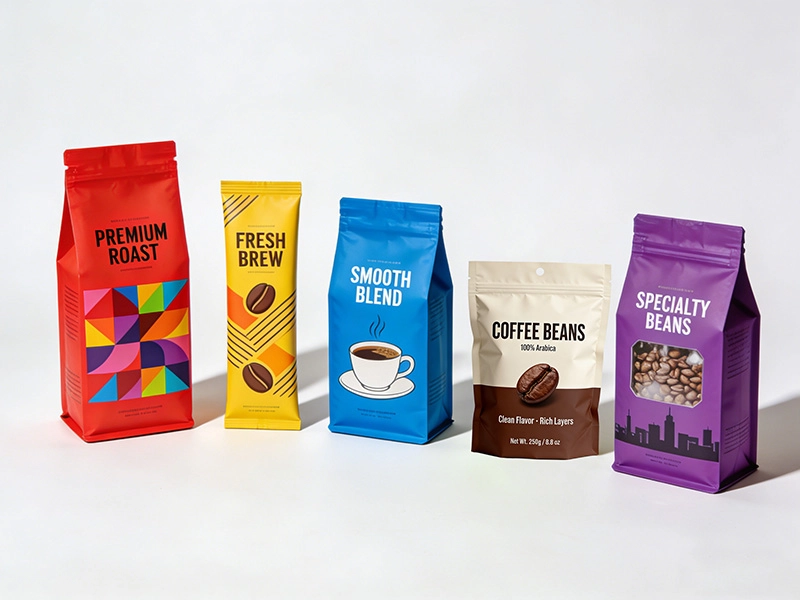
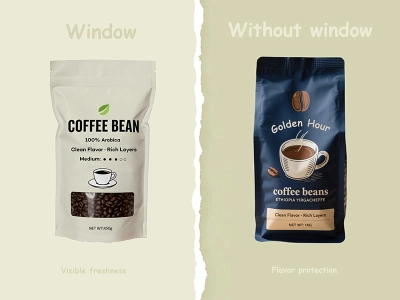
Walk into any specialty coffee shop, and you'll see a wide variety of coffee packaging bags on the shelves—some with transparent windows that clearly show the coffee beans, others aluminum bags with beautifully printed designs but no visible beans. In today's diverse packaging design landscape, choosing the right option has become a crucial question for many roasters and brands customizing their packaging: Should my coffee bag have a transparent window? What makes sense to add one?
As a supplier with nearly 20 years of experience in coffee packaging printing, we understand that packaging is the first point of contact for consumers with a brand. This is not just a matter of coffee packaging design aesthetics, but also a strategic choice. Coffee bags with clear window allow customers to see the contents at a glance, establishing instant trust. However, light can also become a "thief" that steals the coffee's flavor.
This article will provide an in-depth analysis of the pros, cons of coffee bags with or without windows, and a discussion on the selection of coffee packaging materials. Whether your product is roasted beans or coffee powder, this article will help you choose a packaging solution that suits your product performance and brand consistency.
Design concepts behind different coffee packaging printing options
- Coffee bag with window design - Product visualization enhances trust
This design primarily uses transparent window to showcase products, convey brand stories, and enhance interaction with consumers, and is often paired with functional options such as zippers and degassing valves.
1. Increased consumer trust and visual verification
For consumers who want to assess quality by seeing the color, size, and texture of the beans (e.g. whole beans vs. ground, consistency of roasting level), transparency increases their shopping speed and satisfaction, helping them quickly identify products in retail stores.
2. In line with specialty coffee aesthetics
Specialty coffee brands typically emphasize the uniqueness of single-origin coffee beans, roasting details, and handcrafted processing. The printing area deliberately avoids the window area, concentrating core information such as roasting date, origin, and processing method on the side or bottom of the bag. This ensures retail shelf visibility without affecting the visual focus on the coffee beans themselves.
For example: Many small and medium-sized roasters choose to use kraft paper coffee bags with window, printing the brand logo and QR code only next to the window. This highlights the natural texture of the coffee beans and makes it easy for buyers to scan the code to view roasting details.
3. Adaptable printing materials and window options
Coffee bag with clear window often use acid-free, eco-friendly inks with an inner food-grade PE material, which are FDA-certified for direct food contact. At the same time, the printing area will functionally complement the UV-protective film of the window.
For example: Printing a light-resistant window logo around the window, which is especially suitable for single-origin coffee packaging, helping roaster highlight the unique appearance of the coffee beans.
Coffee bag without window design - Printing quality and freshness enhance brand image
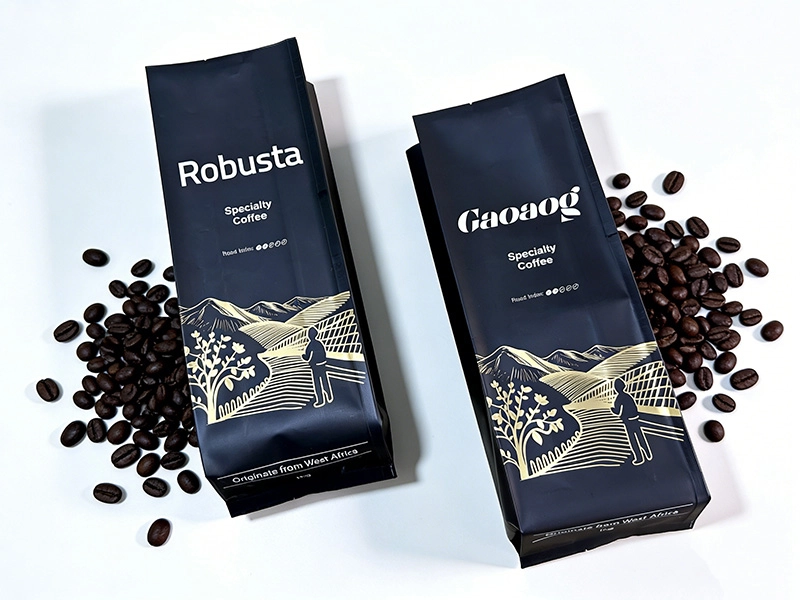
The core advantage of coffee bag without window is their complete airtight and light-proof design. Brands that prioritize the freshness of coffee beans will custom coffee bag like this. Usually, various colors, prints, and material textures are added to showcase the brand image and functionality. Using visual elements to make up for the lack of visualization and enhance trust through information is the mainstream choice for premium coffee packaging.
1. Coffee packaging printing conveys freshness information
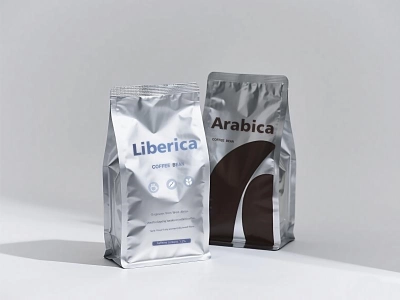
Without a visible window to directly display the product, the packaging design and printing become the primary source of product information. Typically, the front features a resealable zipper, combined with coffee bag degassing valve functional design. The use of dark tones (such as matte black or dark green) and metallic inks directly conveys the core value of blocking light & oxygen, and locking in aroma.
Some specialty coffee brands often use matte black side gusset coffee bags with valve (aluminum foil bag), featuring full-page illustrations of the coffee bean origins and a coffee bean roast index. This reinforces the professional attribute of freshness-preserving packaging and enhances the product premium value through visual storytelling.
2. Printing luxury coffee packaging design help brands stand out
Packaging without window design provides ample creative space for printing, and rich designs help brands stand out in the crowded market. Common chain coffee brand custom printed coffee pouches incorporate its brand logo, brand slogan with brewing guide and flavor profile, and uses Pantone spot color printing to ensure brand color consistency. They also include QR codes linking to the Roaster website, enhancing customer experience and trust.
In addition, eco-friendly bakers will choose recyclable pouches for coffee products. Print 100% recycled material label on the bag body to meet the popular demand of the sustainable coffee packaging industry and attract environmentally conscious consumers.
Pros and cons of coffee bags with and without windows
When designing coffee packaging, brands often strive to balance product awareness, freshness protection, and overall brand positioning. Below is a clear comparison to help you assess which option best suits your product strategy, shelf placement, and target audience.
- Coffee bag with window
The Pros
1. Intuitive quality display
The transparent window increase product exposure, allowing consumers to choose which to buy based on the color, size, and texture of the coffee beans (e.g., whole or ground beans, roast level). Transparency also visually showcases quality and flavor, reducing purchase hesitation.
2. Shelf Differentiation
Premium coffee consumers typically prefer brands with a "real, natural, and warm" taste. A transparent window helps the naturally brown coffee beans stand out more among rows of metallic or matte foil bags.
3. Inventory Monitoring
Even at home, consumers can easily see how much coffee they have left, making it convenient to repurchase and replenish their "coffee inventory" promptly.
The Cons
1. Reduced light barrier
Acknowledge that while windows grab attention on the shelf, they risk shortening the shelf life. Coffee is extremely sensitive to light. Ultraviolet rays and even indoor fluorescent lamps can rapidly reduce the freshness of coffee beans, causing it to develop a "skunk flavor" or a bland taste (photodegradation).
2. Reduced Packaging Barrier Properties
To create a window, the intermediate high-barrier metal layer (such as aluminum and VMPET) needs to be removed. While many transparent films have good performance, their moisture-proof or oxygen-resistant properties rarely match the oxygen barrier of a fully metallized film.
3. Brand and Design Limitations
Beans lose their visual appeal over time when exposed to light for extended periods. For example, they may fade or become oily, which actually reduces purchase potential. The window location also limits the placement of printed graphics and branding elements.
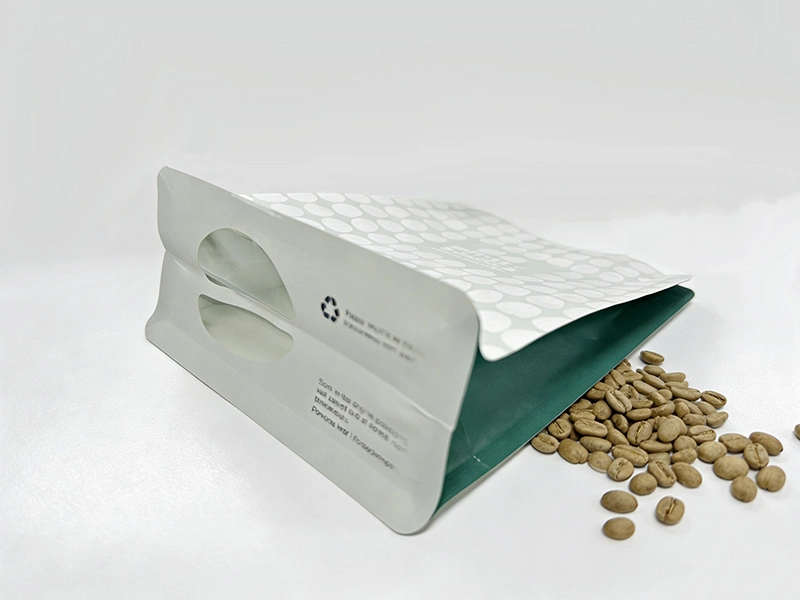
- Coffee bag without window
The Pros
1. Excellent preservation performance
The fully covered packaging bag made of metalized film, offer enhanced protection against oxygen, UV rays, and moisture. It effectively extends the shelf life of coffee beans to 6-12 months, making it highly suitable for single-origin and micro-lot premium coffee beans.
2. More freedom for brand and design
The entire printing surface is customizable, supporting hot stamping and spot UV finishes. This helps brands create a clean, high-end image, and is also a printing style favored by roasters.
3. Better for long time storage
The sealed bag better preserve flavor stability, and the absence of direct sunlight affects color. It's convenient for customer to store on retail shelves for a longer time and reduce inventory loss.
The Cons
1. No product visibility
Consumers cannot visually inspect the quality of the coffee beans, requiring additional samples or videos to convince them. This may reduce purchasing confidence for buyer unfamiliar with the brand.
2. Higher packaging costs
Fully custom printing is more expensive than coffee bag with window. The use of multi-layered composite materials (e.g., foil, specialty laminates) and custom printing (e.g., full-panel graphics) are more expensive than window bags.
3. Reliance on brand awareness and design
Windowless packaging relies more heavily on brand awareness to drive sales. Consumers find it difficult to directly assess product quality. Therefore, brand visual identity requires greater investment, using design, color, and storytelling elements to attract customers.
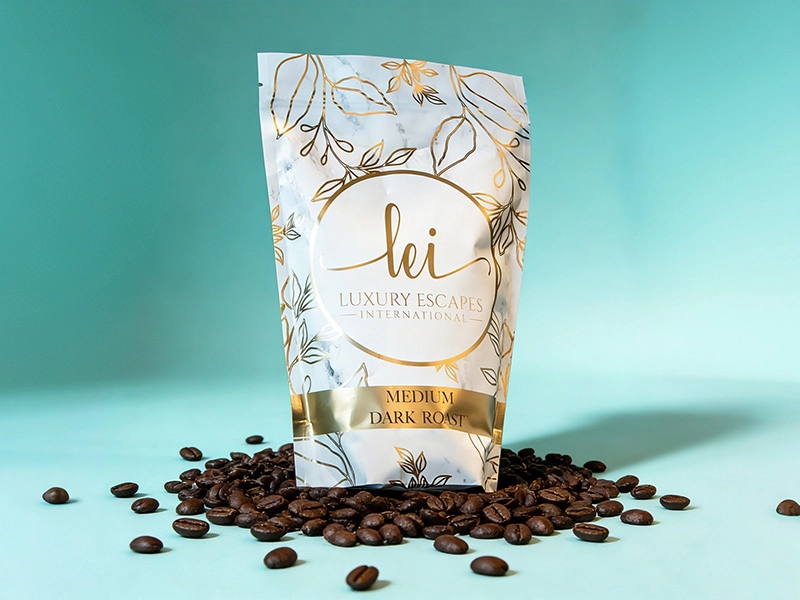
Considerations for coffee bag design
Regardless of the coffee packaging option chosen, functionality and value should be considered. Coffee bag with window showcase the product itself through streamlined printing. Coffee bags without windows compensate for the lack of visual appeal with richer printing. The core principle is to convey brand value through printing.
- Windows should be chosen
Depending on the type of coffee, light/medium roast is more suitable. This is because the beans are dry and oil-free, with an attractive cinnamon or chocolate color, which is very appealing.
If your product is primarily sold on supermarket shelves and has a very fast turnover (e.g., a shelf life of only a few weeks), the long-term impact of light can be ignored, making window display more important.
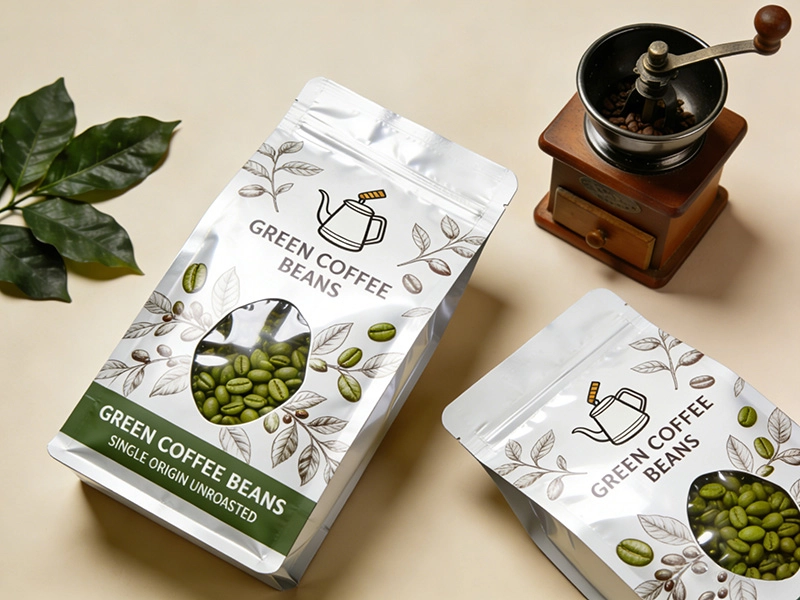
For types of coffee that are less sensitive to light, such as green coffee or flavored coffee.
- Window display is not recommended
For the dark roast type of beans, the abundant oil content is prone to staining the windows. This not only affects the appearance but also makes them more susceptible to oxidation when exposed to light.
Ground coffee powder is also unsuitable for direct display, as it will look like soil or dust. It lacks aesthetic appeal, and the powder is prone to sticking to the window.
For coffee products requiring long-term storage, high-barrier packaging is more professional and creates a more upscale display effect.
Different design packaging material structures
The choice of packaging materials determines the freshness, cost, and texture of the product. Selecting the appropriate material structure based on the coffee packaging design and the characteristics of the coffee beans is also crucial.
- Material selection for coffee packaging bag with window
1. PET/PE or MOPP/PE (Standard 2-Ply)
Lowest cost and simplest manufacturing process, but poor barrier properties (high OTR). Suitable for green bean packaging, short-term trade show distribution, or inner individual packaging pouches.
2. MOPP/PET/PE (Reinforced 3-Ply)
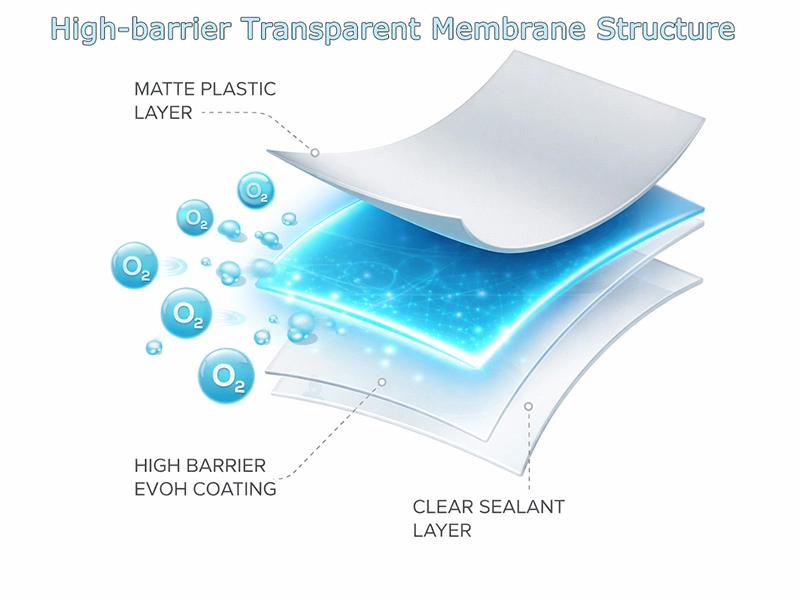
The middle layer uses a transparent material instead of a metal layer. It's not as good at blocking oxygen as other parts of the bag. We can provide food-safe barrier film (like EVOH coating or special nylon) to minimize risk, but it will never be as airtight as a full aluminum foil bag. Suitable for most supermarket retail coffee bag with window, balancing cost and quality.
3. PE/PE (Recyclable Mono-material)
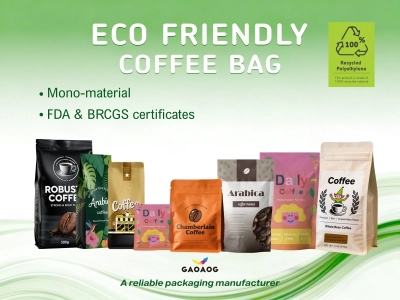
All-PE structure, meets European and American "recyclable" standards. Meets environmental requirements while retaining display functionality. Suitable for brands that prioritize environmental sustainability. 100% recyclable coffee bags will be a key selling point for brands that emphasize "environmental friendliness, sustainability, and green responsibility."
- Material selection for coffee packaging bag without window
MOPP/VMPET/PE or MOPP/AL/PE (High barrier)
The middle layer uses an aluminum foil structure, providing 100% light blocking, oxygen barrier, and moisture protection. The matte finish enhances the overall premium feel, complemented by hot stamping, spot shining, and spot UV treatments.
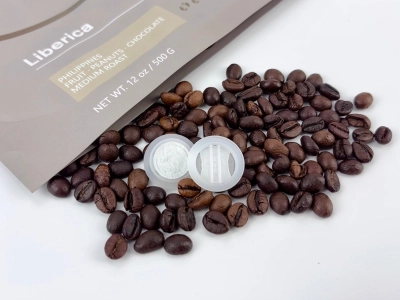
Additional features: One-way degassing valve releases carbon dioxide after baking, preventing the bag from expanding. The zipper and easy to tear design ensures both a tight seal for repeated opening and closing and ease of use.
Digital printing and coffee bag
Digital printing plays a vital role in coffee brand packaging. It delivers nuanced color gradations on packaging bags, combining the four basic CMYK colors: cyan, magenta, yellow, and black. This means it can match any color you need, with a resolution of 300 dpi or higher. With our HP Indigo digital printing technology, these are no longer problems:
- No plate making fees: Whether windowed or fully printed, the design can be printed directly onto the film, saving you expensive plate-making costs.
- Flexible window designs: Traditional gravure printing often has fixed window positions, while digital printing allows for experimentation with different designs on different SKUs (provided the bag type remains consistent).
- Low MOQ: You can order 500 pcs to test market response without incurring inventory pressure.
- More eco-friendly printing: Less ink and paper consumption, using water-based, soluble inks and chemicals that release fewer volatile organic compounds (VOCs).
Contact us to customize your special coffee packaging solution
Provide your bag type, size, material, and design drawing, and we will quickly provide you with a quote and printing options. We can also provide samples or real-life videos so you can experience the quality of the materials and printing firsthand. For more packaging information, keep following gaoaog packaging.