
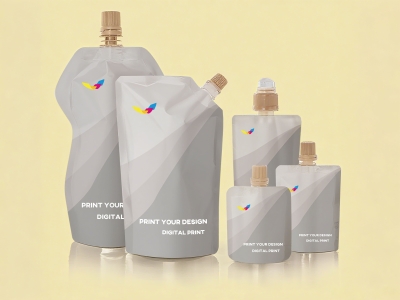
Glass bottles have long been the default packaging for juice, ready-to-drink cocktails, sodas and other beverages. Spout liquid packaging has become more common and popular today. It delivers a flexible alternative for beverage brands.
Imagine heading out for the weekend. You bring drink-filled spout pouches and fried chicken in your bag. Get the drinks to the park intact and with minimal weight. You enjoy a wonderful picnic there with your friends.
Spout pouches solve many pain points for portable, single-serve and refill beverage lines. But are they always a better choice than glass bottles?
1. Core Differences: Spout Pouches vs Glass Bottles
1.1 Weight, Shipping & Warehouse Savings
Empty spout pouches are lighter than glass bottles.
Many beverage brands have shifted to this lightweight, portable packaging. It can reduce transportation costs and storage requirements. While also lowering the likelihood of damage-related claims.
1.2 Shatter Resistance for Retail & On-the-Go
Glass bottles are fragile when moving. Spout pouches are less likely to shatter.
Spout Pouches fit outdoor use well. When you’re camping or traveling, spout pouches are a welcome relief, like water in the desert. They keep your load light and your drinks easy to carry.
1.3 Brand Design & Custom Print
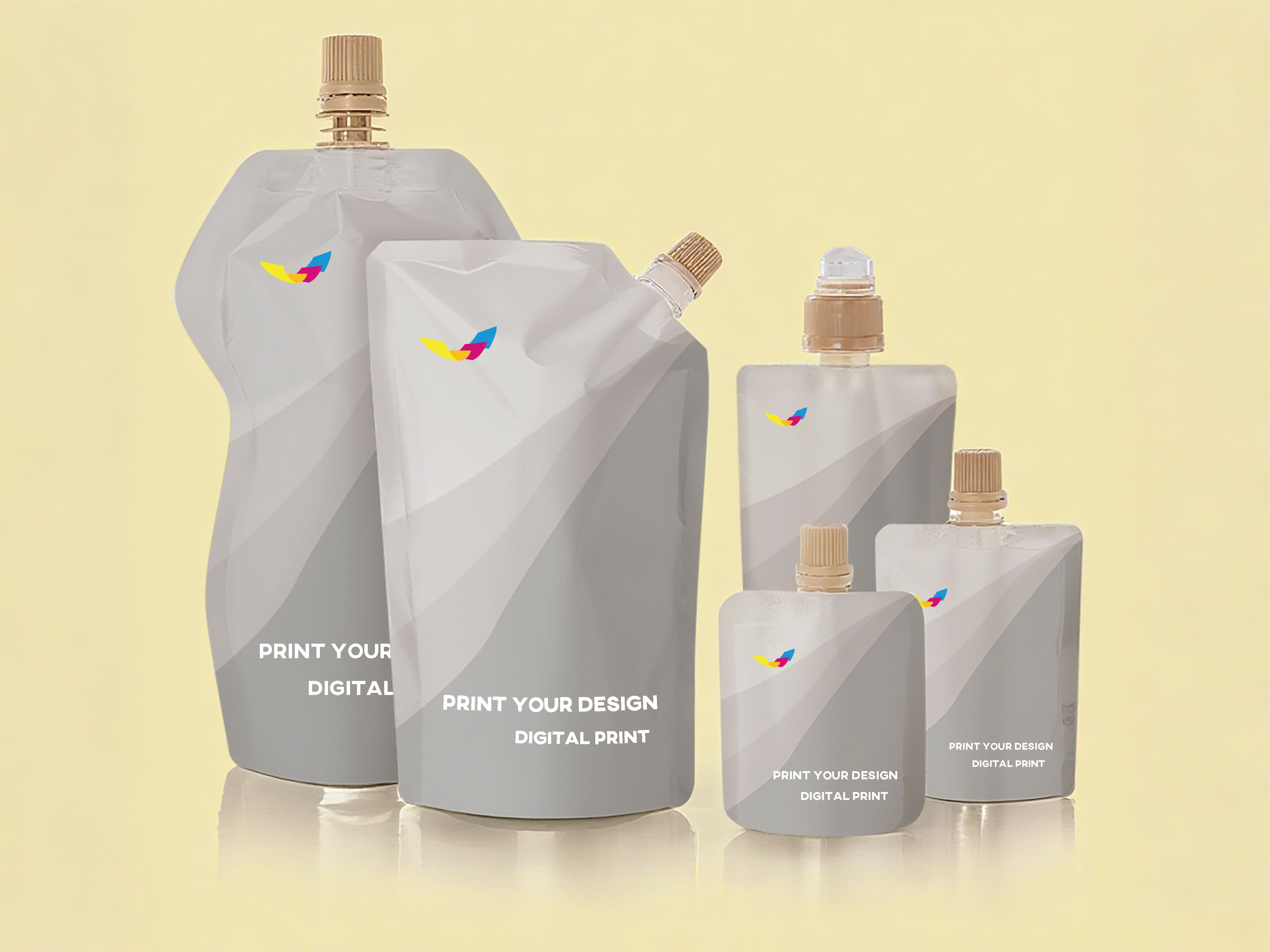
Digital flexible printing works well for spout pouch production. Some brands chasing eye-catching packaging choose flexible pouches instead of glass bottles. They customize shaped spout pouches with diverse colors and graphic elements.
We have some cooperation cases and design cases available for your reference. A wide range of pouch shapes and spout cap options are supported. Extra add-ons can be selected according to your actual production requirements.
1.4 Resealability & Portability
The nozzle can be tightened and resealed. Keeping unfinished beverages fresh is probable. It is ideal for users who prefer small serving sizes.
However, glass bottles cannot be resealed after opening. This makes repeated use inconvenient.
2. Which Beverage Products Work Best With Spout Pouches
Flexible pouches are especially popular for juices, smoothies, energy drinks, and kid-friendly beverages. But not all beverage types are suitable for use in spouted pouches.
2.1 Ready-to-Drink (RTD) Beverages
- Product formats: Pre-prepared drinks can be consumed directly after opening.
- Consumption scenarios: Outdoor parties, music festivals, picnics, camping and leisure activities.
2.2 Flavoured Drinks & Fruit-Based Beverages
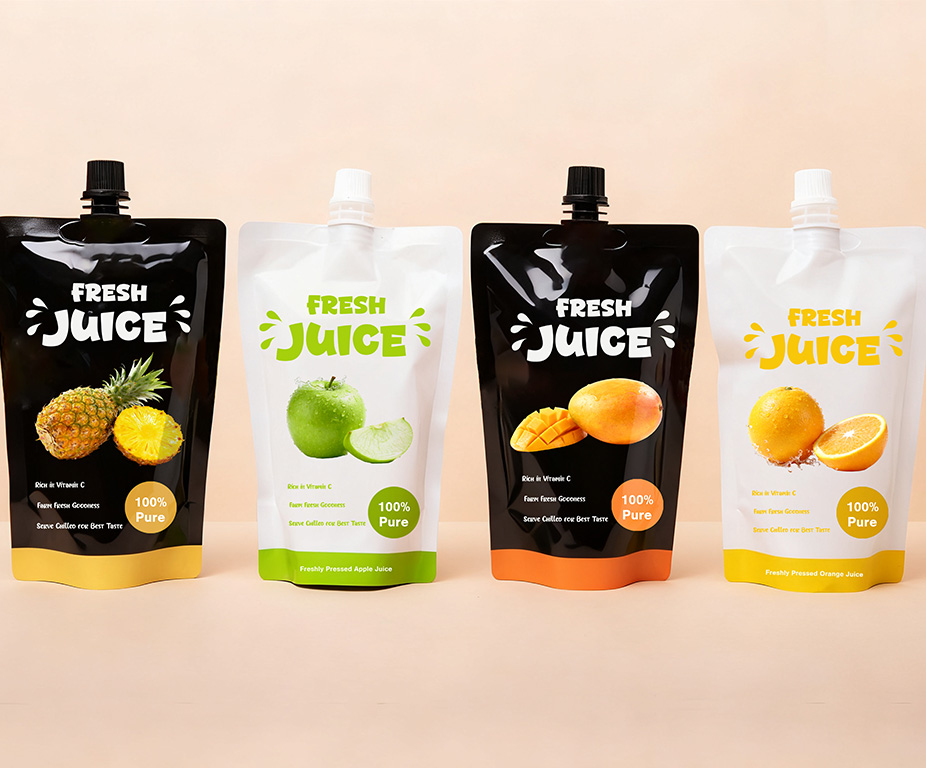
- Branding: Flexible package printing offers diverse design styles and formats. It makes the beverage brands stand out.
2.3 Single-Serve and Portable Beverages Packs
- Serving size: Customize the appropriate single-serving capacity based on the product positioning.
- Usage method: Drink directly or pull into the cups—choose corresponding capacities and nozzle designs.
2.4 Bulk Refill Pouches for Beverages
- Refill requirements: Refill-style pouches act as a lightweight alternative to large rigid bottles for multiple beverage categories.
- Resealability: Pay attention to the reclosable spout’s performance after repeated sealing processes.
- Material and shelf-life demand: Verify package structure based on liquid characters, storage period and usage method.
3. Key Beverages Packaging Requirements
3.1 High-barrier needs
Beverage packaging has different barrier requirements by product. The right material structure must match your product characteristics.
- Oxygen and light barrier: Light and oxygen can alter beverage flavour and quality. For light-sensitive drinks such as white wine, light-blocking materials should be considered.
- Flavor and aroma retention: Evaluate material compatibility with your beverage. Minimize any unnecessary flavor changes or loss of aroma.
- Shelf-life validation: Test the package’s barrier performance, sealing performance and product shelf life.
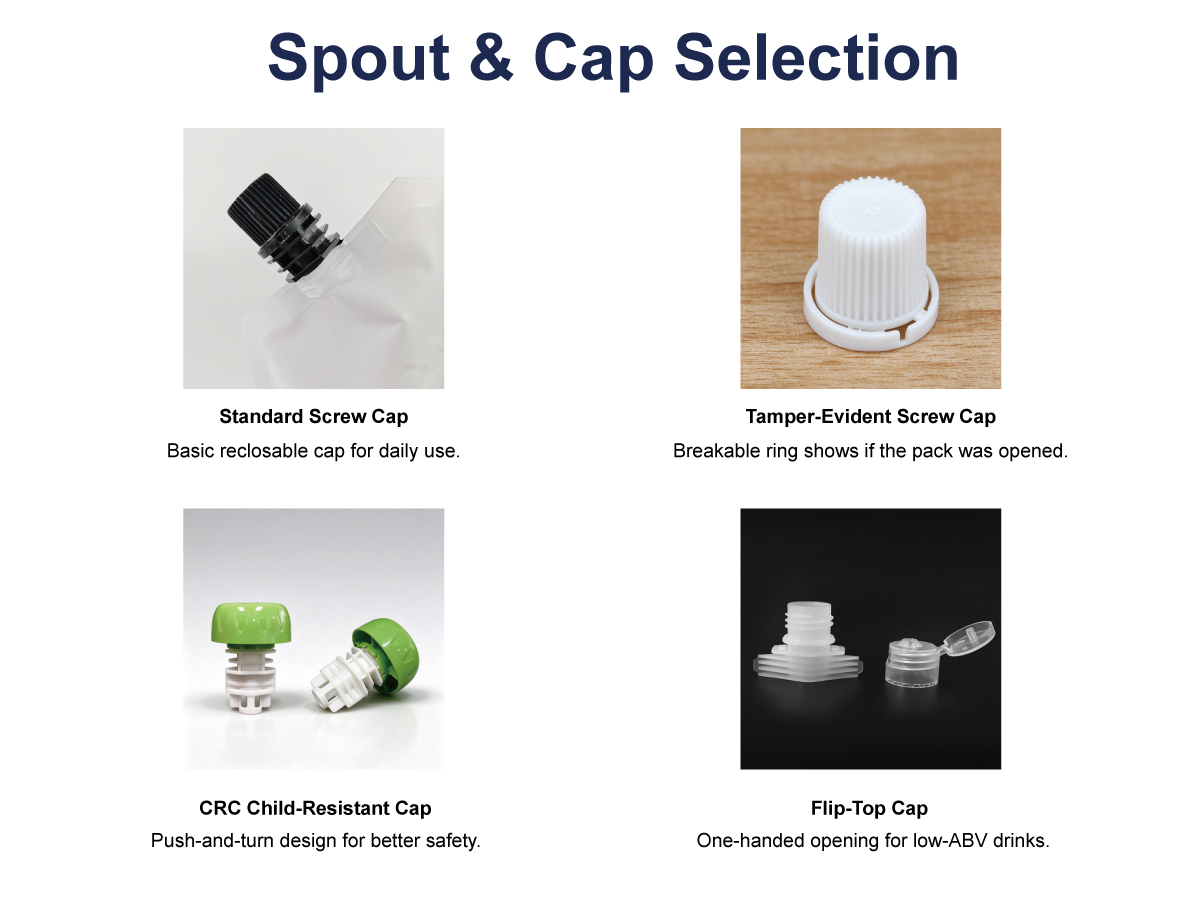
3.2 Tamper-evident caps
- Evidence of tampering: Most retail beverage sales use tamper-proof rings or other applicable anti-tampering structures. This can help consumers identify the initial opening status.
A wide selection of caps is available for customization. See practical application examples below.
3.3 Spout size selection
Most beverage brands customize spout pouches for auto-filling machinery. Choosing the matched spout is critical.
- Small-bore spouts: Used for single consumption and for controlling the amount of liquid poured out, taking into account both ease of use and leak-proof design.
- Large-bore spouts: Refills or those that require a quick pour of liquid.
For instance, a newly established alcohol brand customizes pouches with 0.39-inch/10mm cap spouts. (This measurement refers to the spout neck diameter.) It works for their single-serve alcoholic drinks. Once filled, the pouches can be packed and shipped directly.
Each beverage pouch is built to order. Its barrier properties, cap types and spout sizes can be adjusted for your product.
Click to find more solutions for your packaging needs.
4. Limitations: When Glass Still Makes Sense
Based on the advantages of spout pouches, light, handy... Are spout pouches a better alternative to glass bottles?
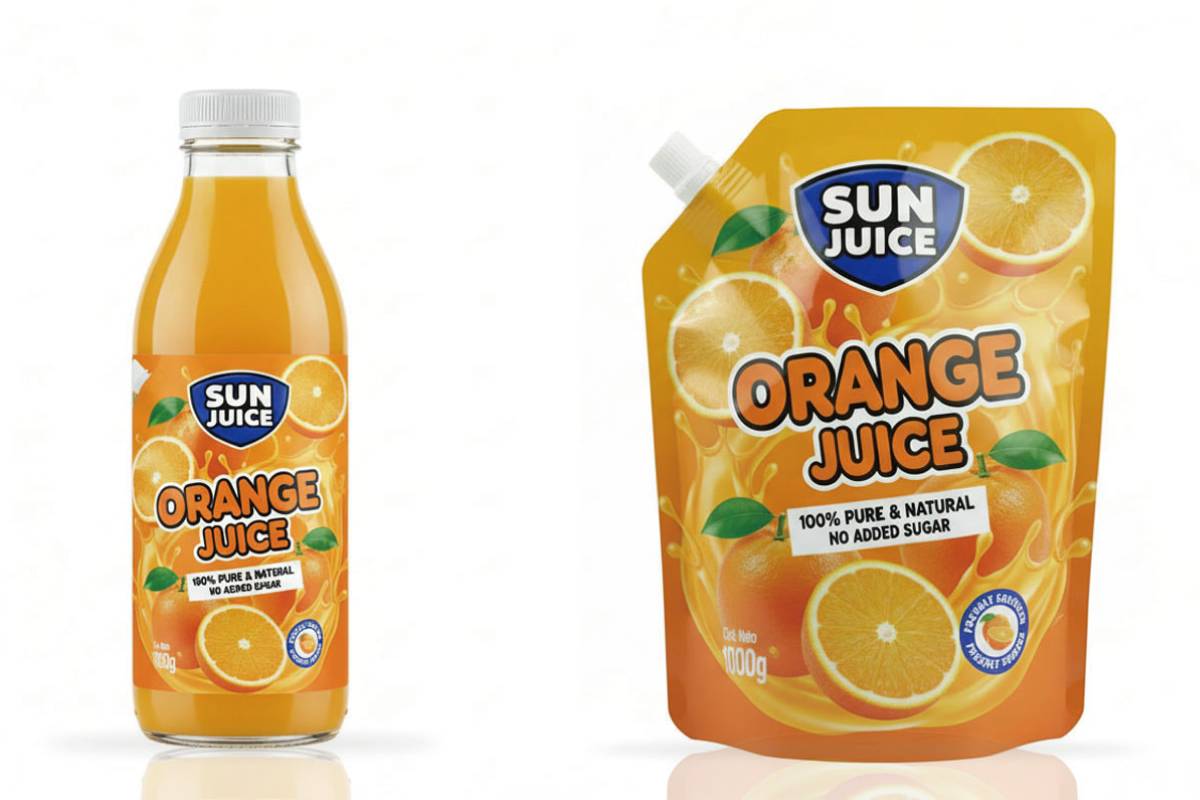
Spout Pouches are not a universal replacement for all beverage packaging. They carry certain limitations.
- Limited Durability: Spout pouches fit many uses. But they cannot match glass for impact and puncture resistance. Products need strong physical protection may use glass bottles.
- Shelf Stability: Some beverages require long shelf life. Glass blocks light and oxygen effectively. It preserves drink quality during long-term storage.
- Recycling Complexity: Conventional spout pouches are made of composite laminated films, plastic spouts and caps. Mixed materials make recycling difficult. Glass bottles are made from a single glass base. Glass can be recycled infinitely with no loss in quality. Their caps and labels, however, are separate materials.
Market demand and recycling regulations push the development of mono-material spouted pouches. Using one polymer family for the film, spout and cap simplifies recycling. Recycling still depends on local waste infrastructure.
For beverages that have a strict storage condition demand, glass bottles may be a better choice.
- Premium positioning: Many high-end spirit brands value glass bottles. They prefer glass’s weight, texture, clarity and classic look.
- Long-term aging and storage: For products needing long aging or storage, test material compatibility and storage performance first. Spout pouches cannot simply replace glass bottles.
- Established consumer expectations: Some market buyers expect traditional glass bottles. Switching packaging may hurt brand recognition and customer experience.
- Product and process compatibility: Filling, sealing, shipping and shelf display requirements also shape packaging choices.
Packaging selection should consider products, branding and usage. Do not merely compare which packaging is lighter.
5. Checklist: Should You Switch Your Beverage Packaging to Spout Pouches?
Check whether your beverage actually fits spout pouches:
√ Launching RTD or portable single-serve beverages
√ Aim to cut transportation and breakage costs
√ Target customers value outdoor, travel or on-the-go consumption
√ Hope to achieve bold eye-catching branding design
√ Lower risk of breakage during transport
FAQ about custom spout pouches
1. Are spout pouches safe for drinks?
Yes, spout pouches have been used in food and beverage industries for many years. You can customize food-grade materials for your beverage, such as PET, PA and PE.
2. What are the main advantages of spouted pouches compared to glass bottles?
Lightweight, portable and resealable. Pouches can be sealed after opening. This makes spout pouches suitable for leftover drinks preservation.
3. Can beverage spout pouches use tamper-evident caps?
Yes. You can choose tamper-evident caps for your products. This lets you confirm the package remains intact before use.
4. Is a spouted pouch cheaper than glass bottle packaging?
No fixed price. Custom packaging costs vary by order volume, format, specs, lead time and multi-SKU needs.
5. Can beverage spout pouches be customized with different designs and colors?
Of course yes! Digital printing offers a wide range of custom choices. It includes color, graphic, pouch formats and so on. You can implement creative ideas into actual production.
→ View our Custom Pouches Page: custom-spout-pouches
Conclusion
Flexible spout pouches are increasingly being applied in the beverage industry. They can meet the needs of brand creative design, and is also convenient for consumers to carry and reuse multiple times.
Gaoaog supplies custom spout pouches for alcoholic drinks and other liquids. If you need flexible packaging for spirits, RTD cocktails or beverage refills, we will offer suitable solution. They fit your volume, print and shelf-life needs.
Ready to order custom flexible pouches? Contact our team today.


